Bake the Best Lasagna: Tips and Tricks
Are you ready to take your pasta game to the next level? Want to make a homemade lasagna recipe that’s as good as your favorite Italian restaurant’s?
To make an amazing classic lasagna recipe, start with the best ingredients and techniques. Choose fresh pasta sheets and rich sauces. Layering these ingredients right is key.
With the right tips and tricks, you’ll impress everyone. We’ll cover the secrets to the best lasagna. From the perfect sauce to layering, we’ve got you covered.
Table of Contents
The Art of Perfect Lasagna
Making the perfect lasagna is all about layering and flavor balance. It’s about blending flavors and textures in this beloved Italian dish.
What Makes a Great Lasagna
A great lasagna is more than pasta, sauce, and cheese. It’s about balance and harmony in every bite. The secret is finding the right mix of flavors and textures.
Balance of Flavors and Textures
The best lasagna has tender pasta, rich sauce, and creamy cheese. Adding spinach, mushrooms, or ground beef can boost the taste. For a vegetarian lasagna, try layering roasted veggies or using eggplant.
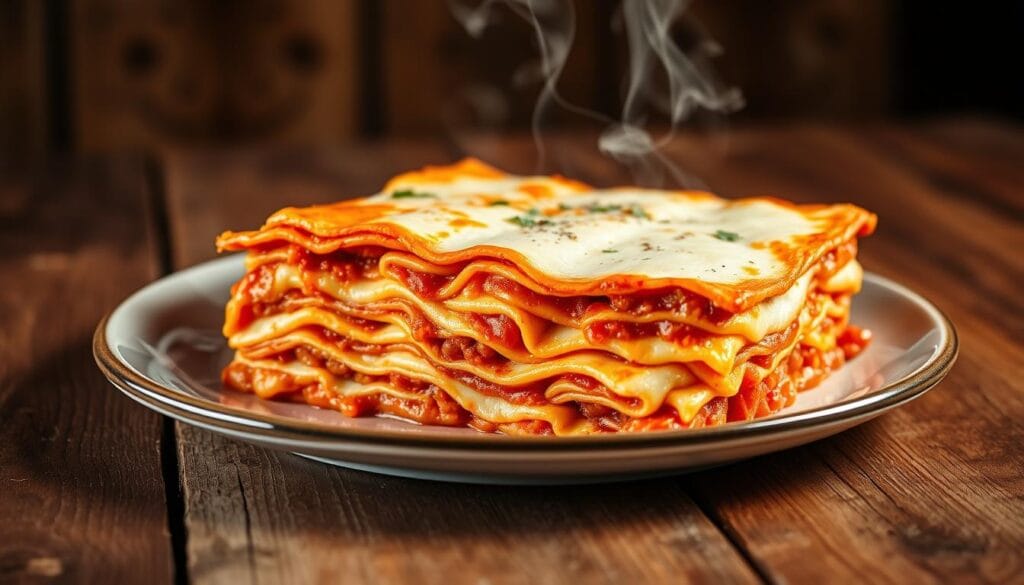
Lasagna comes in many flavors, from lasagna alla Bolognese to vegetarian lasagna. Each version offers something special. This variety can inspire your own easy lasagna recipe.
Whether you stick to traditional meat lasagna or try a vegetarian version, knowing these regional flavors can make your dish stand out.
Selecting Quality Ingredients for Your Lasagna
A great lasagna starts with good ingredients. You need pasta sheets, cheese, and sauce. The quality of these ingredients makes a big difference in taste and satisfaction.
The pasta you choose affects the lasagna’s texture and taste. Choosing the right pasta sheets is key.
Choosing the Right Pasta Sheets
Pasta sheets are the heart of lasagna. You can pick from fresh or dried, and no-boil or traditional sheets. Knowing the differences helps you choose wisely.
Fresh vs. Dried Pasta
Fresh pasta is made with eggs and is softer. Dried pasta is more durable and lasts longer. Fresh pasta adds a delicate taste but is harder to prepare and has a short shelf life. Dried pasta is easier to use and cooks well.
No-Boil vs. Traditional Sheets
No-boil sheets cook in the oven with the lasagna. They soak up moisture. Traditional sheets need boiling before use. They offer a more authentic texture.
For ameat lasagna or alasagna with Italian sausage, good pasta enhances the flavors. For alasagna with ricotta cheese, the pasta should balance the creamy cheese without getting soggy or dry.
Here are some key considerations when selecting pasta sheets:
- Texture: Fresh pasta is softer, while dried pasta is firmer.
- Convenience: No-boil sheets save time, while traditional sheets offer a more traditional cooking experience.
- Flavor Absorption: Think about how well the pasta will soak up the sauce and cheese flavors.
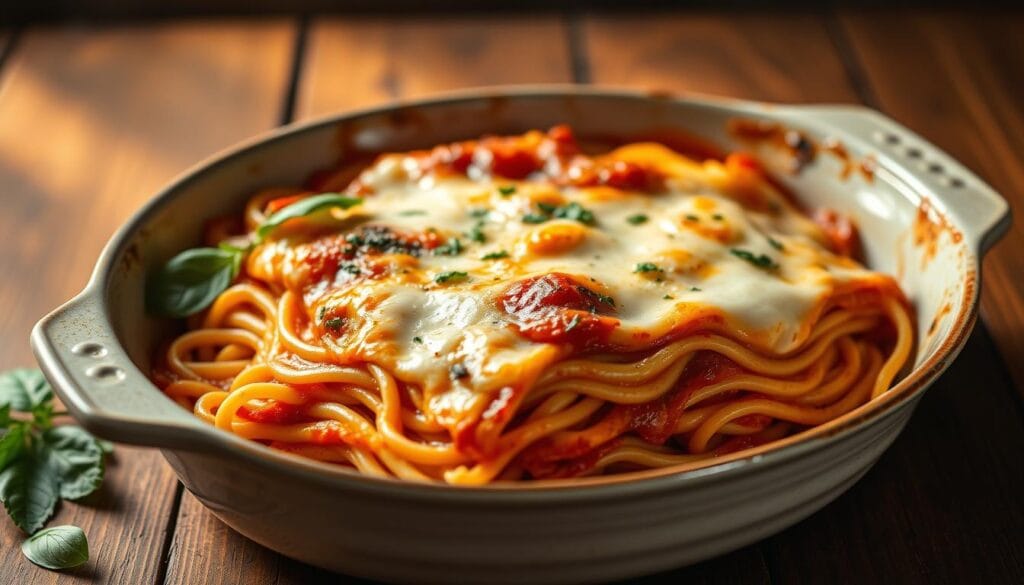
By picking the right pasta sheets, you can improve your lasagna’s quality. This is true for both meat and vegetarian lasagnas.
Mastering the Classic Lasagna Recipe
A classic lasagna recipe is more than just a list of ingredients. It’s about technique, patience, and understanding Italian culinary traditions. To make a true Italian lasagna, you must start with the basics.
Traditional Italian Approach
The traditional Italian way of making lasagna comes from the country’s rich culinary history. It’s about layering flavors and textures to make a dish that’s more than its parts. “Lasagna is a dish perfected over centuries,” says an Italian culinary expert. “It’s not just about the ingredients, but how you layer them.”
“La vera ricetta per un lasagna classico inizia con la scelta degli ingredienti più freschi e di qualità.”
When making a classic lasagna, the quality of your ingredients is key. You need fresh pasta sheets, a rich bolognese sauce, and a creamy béchamel or ricotta base.
Authentic Bolognese Technique
The bolognese sauce is a key part of a classic lasagna recipe. An authentic bolognese technique involves slow-cooking ground beef and pork with tomatoes, onions, carrots, celery, and red wine. This slow cooking process melds the flavors together, creating a rich sauce.
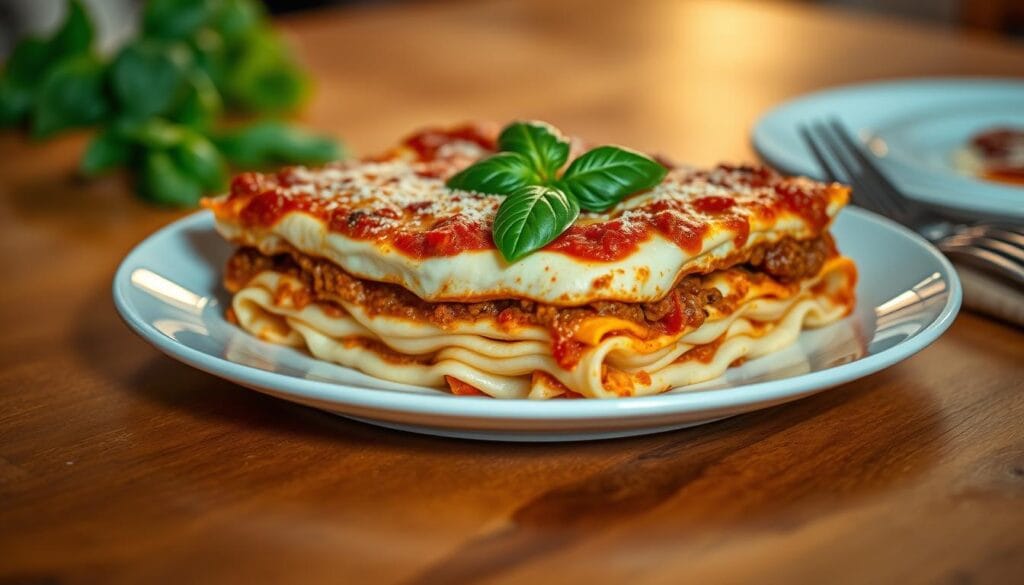
Italians often debate between béchamel sauce and ricotta for the white layer in lasagna. Béchamel, made with butter, flour, and milk, is creamy. Ricotta provides a lighter, more rustic feel. Both have their merits, and the choice depends on personal preference.
For a classic lasagna recipe, using high-quality ingredients and traditional techniques is crucial. Whether you choose béchamel or ricotta, your homemade lasagna will be a hit.
To summarize, mastering the classic lasagna recipe involves understanding the traditional Italian approach, using authentic bolognese technique, and choosing between béchamel and ricotta for the white layer. With practice and patience, you’ll create homemade lasagna that will impress.
Creating the Perfect Meat Lasagna
To make a great meat lasagna, balance flavors and textures are key. A mix of ingredients is important for a dish that’s both tasty and memorable.
Beef and Pork Combinations
Meat lasagna often mixes beef and pork for a rich taste. Beef gives a strong flavor, while pork makes it tender.
Selecting the Right Meat Ratio
Choosing the right mix of beef and pork is crucial. A common mix is 75% beef and 25% pork. Beef is hearty, and pork adds a rich touch.
Cooking Techniques for Maximum Flavor
Cooking the meat right is key for flavor. Brown the meat well for a deep flavor. Simmer it with tomatoes and herbs for a savory sauce.
Adding Italian sausage to your lasagna can also boost flavor. It adds spices that go well with beef and pork, making the dish richer.
By using quality meat and good cooking methods, you can make a meat lasagna that’s both tasty and satisfying. It’s perfect for any occasion, from family dinners to special events.
Delicious Vegetarian Lasagna Options
Lasagna isn’t just for meat lovers; vegetarian versions are just as satisfying. You can create a mouth-watering vegetarian lasagna by layering pasta, cheese, and vegetables.
Spinach and Ricotta Cheese Combinations
A classic combination in vegetarian lasagna is spinach and ricotta cheese. This pairing not only tastes great but also provides a good balance of nutrients.
Preparing Spinach Properly
To use spinach in your lasagna, it’s essential to prepare it correctly. Start by thawing frozen spinach and squeezing out excess water. You can also sauté fresh spinach with garlic to enhance its flavor. As one chef notes,
“The key to great spinach is to cook it just until it’s wilted, preserving its nutrients and flavor.”
Enhancing Ricotta Mixture
The ricotta mixture is another crucial component of vegetarian lasagna. To enhance it, you can add grated Parmesan cheese, chopped fresh herbs like parsley or basil, and a pinch of salt and pepper. Mixing these ingredients well will result in a creamy, flavorful layer in your lasagna.
When combining spinach and ricotta, you create a delicious and healthy filling for your lasagna with spinach and lasagna with ricotta cheese. This filling can be layered with pasta sheets and other ingredients to build a satisfying vegetarian lasagna.
Some other tips for making a great vegetarian lasagna include using a variety of cheeses, such as mozzarella and Parmesan, and adding other vegetables like bell peppers or mushrooms to enhance the flavor and nutritional value.
- Choose fresh, high-quality ingredients for the best flavor.
- Don’t overmix the ricotta mixture to keep it light and creamy.
- Layer your lasagna carefully to ensure even cooking.
Layering Techniques for the Ultimate Lasagna
To bake the perfect lasagna, mastering the layering technique is key. Layering is not just about stacking ingredients. It’s about creating a harmonious balance that elevates the dish.
The Perfect Layering Order
The order of layers in your lasagna matters a lot. You start with a sauce layer, then pasta, followed by a mix of ricotta and other cheeses. Finish with a layer of mozzarella.
Starting and Ending Layers
Start and end with layers that will give a good base and a nicely browned top. A sauce layer at the start keeps the pasta moist. Mozzarella at the end gives a beautiful crust.
Number of Layers for Different Dishes
The number of layers depends on the dish size and your taste. Usually, three to four layers are enough for a standard lasagna.
A well-layered lasagna is a delight to both the eyes and the palate. As Giada De Laurentiis once said, “Lasagna is like love – it’s much better when it’s layered.”
“The love you put into making lasagna is just as important as the ingredients you use.”
Baking Secrets for Homemade Lasagna
A perfectly baked lasagna comes from careful temperature control and timing. To get it right, you need to know the basics of baking a homemade lasagna. The right temperature and baking time are key to a great lasagna.
Temperature and Timing Guidelines
Preheating your oven is key for a great lasagna. It helps your lasagna cook evenly from the start.
Preheating Importance
Preheat your oven to about 375°F (190°C). This temperature is perfect for melting cheese and cooking pasta without burning the top.
Adjusting for Different Oven Types
Different ovens heat differently. If you have a convection oven, you might need to adjust the temperature or baking time. Always check your lasagna to avoid overcooking.
When baking your classic lasagna recipe, remember the baking time varies. A standard-sized lasagna usually takes 30-45 minutes. Covering it with foil for the first 30 minutes helps prevent the top from burning.
To check if your lasagna is done, look for melted cheese and a hot, bubbly sauce. Letting it rest for a few minutes before serving can also improve the flavors and texture.
Serving and Storing Your Lasagna
Preparing your lasagna takes time. Serving and storing it right is key. This keeps your dish tasty and enjoyable, even after baking.
Resting Time Importance
Letting your lasagna rest is crucial. This step blends flavors and sets layers. It makes slicing and serving easier.
How Long to Wait Before Cutting
Wait at least 15-20 minutes before cutting. This patience leads to cleaner slices and a better look.
Maintaining Temperature for Serving
Use a warming tray or insulated dish to keep lasagna warm. This keeps it hot and appealing during the meal.
Here’s a quick guide to serving and storing lasagna:
| Task | Timing | Tips |
|---|---|---|
| Resting | 15-20 minutes | Allows flavors to meld and layers to set |
| Serving | Immediately after resting | Use a sharp knife for clean cuts |
| Storing | Within 2 hours of serving | Refrigerate or freeze promptly |
Follow these tips to serve and store your lasagna well. This keeps its quality high and makes your meal enjoyable.
Conclusion: Enjoying Your Perfectly Baked Lasagna
Now you’ve learned how to make lasagna. You’ve picked the best ingredients, learned how to layer, and followed baking tips. You’ve made a homemade lasagna that’s truly special.
Lasagna is more than a meal; it’s an experience. When you take your first bite, the pasta, meat sauce, and cheese come together perfectly. The flavors are rich and satisfying, making it great for any time.
Let your lasagna rest before you serve it. This lets the flavors mix and the cheese set. It makes it easier to slice and serve. Whether you’re hosting a big gathering or having a cozy night in, your lasagna will impress everyone.
With these tips, you’ll make delicious lasagna that your family will love. So, go ahead, enjoy your homemade lasagna and savor every bite.