

Mouth-Watering Lasagna: A Family Favorite Recipe
Imagine walking into a kitchen filled with the scent of bubbling marinara and toasted cheese. You remember those Sunday afternoons where the table was full and the laughter was loud. These cherished moments rely on traditional comfort food that warms the soul and unites everyone for a shared meal.
Preparing a meal for a large family or a neighborhood potluck often presents a big challenge, but this dish simplifies the process. It serves as the quintessential centerpiece for any gathering, offering a satisfying experience while minimizing your time in the kitchen.
This homemade lasagna offers authentic flavor for your dinner table. You can create a masterpiece that your family will treasure for years.
Table of Contents
Why Lasagna Belongs on Your Family Dinner Table
Family dinners become special with a homemade lasagna. It’s more than food; it’s a tradition that unites us. Whether it’s a big family event or a quiet night, lasagna is always a good choice.
Lasagna is loved by all, making it perfect for family meals. It’s easy to serve a crowd and can be made ahead of time. This makes it a stress-free option for hosts.
Lasagna is also very flexible. You can make it your own by adding your favorite ingredients. This makes it great for any family gathering.
Lasagna is easy to make, despite its reputation. With a little prep work, you can have a delicious meal ready quickly. This means less stress and more enjoyment for everyone.
Adding lasagna to your family dinners can start a new tradition. It’s a dish that brings people together. So, next time you’re planning a meal, try a hearty, homemade lasagna. It’s sure to be a hit.
Essential Ingredients for the Perfect Lasagna Recipe
To make the perfect lasagna, you need to know the key ingredients. These ingredients are what make it a hit with your family. The right mix of them gives your lasagna that special flavor and texture everyone loves.
The ingredients fall into three main groups: pasta and cheese, meat and sauce, and herbs and seasonings. Each group is important for a lasagna that tastes great.
Pasta and Cheese Components
The base of lasagna is its pasta and cheese. Lasagna noodles keep the dish together. You can pick between boiled noodles or the easier no-boil kind.
The cheese mix includes ricotta cheese for creaminess and mozzarella cheese for a golden top. Some recipes add Parmesan cheese for extra flavor.
- Lasagna noodles (boiled or no-boil)
- Ricotta cheese
- Mozzarella cheese
- Parmesan cheese (optional)

Meat and Sauce Ingredients
The meat and sauce make your lasagna rich and flavorful. Ground sausage or ground beef add a meaty taste. A classic tomato sauce is key, but you can also try bechamel sauce for a white version.
- Ground sausage or ground beef
- Tomato sauce
- Bechamel sauce (for white lasagna)
Herbs and Seasonings That Make the Difference
Herbs and seasonings can take your lasagna to the next level. Basil, oregano, and garlic are common choices. They add flavor and work well with the other ingredients. For a vegetarian lasagna, herbs and seasonings are even more important.
- Basil
- Oregano
- Garlic
- Salt and pepper
Choosing and mixing these ingredients carefully will help you make a lasagna your family will love.
Kitchen Tools and Equipment You’ll Need
To make a tasty homemade lasagna, you’ll need some important tools. The right equipment can greatly improve your cooking and the taste of your lasagna.
A large pot, like a large Dutch oven or stockpot, is essential. It’s needed for boiling the noodles and simmering the sauce. Make sure it’s big enough to hold lots of water.
A 9×13 inch baking pan is also crucial. This size is perfect for lasagna, allowing for even layers and cooking. You can pick from glass, ceramic, or metal pans, based on what you like.
You’ll also need basic kitchen tools. A wooden spoon is great for stirring the sauce. A colander helps drain the noodles, and a sharp knife is needed for chopping.
Other useful tools include a cutting board for prep, a measuring cup and spoons for precise measurements, and aluminum foil for covering the lasagna while it bakes.
With these kitchen tools and equipment ready, you’re set to make a best lasagna recipe. It’s sure to delight your family and friends.
Preparing Your Homemade Lasagna Sauce
Making your own lasagna sauce is easy but key to a delicious meat lasagna. A great lasagna sauce adds depth and richness to the dish.
Making the Perfect Meat Sauce
To start, brown your meat choice – ground beef, sausage, or both. Use a large skillet over medium-high heat. Cook until the meat is fully browned, breaking it up as it cooks. This step boosts the sauce’s flavor and texture.
Giada De Laurentiis once said, “The key to a great lasagna is in the sauce, and the sauce is all about the quality of the tomatoes and the slow cooking.”
“The key to a great lasagna is in the sauce, and the sauce is all about the quality of the tomatoes and the slow cooking.”
— Giada De Laurentiis
Creating a Rich Tomato Base
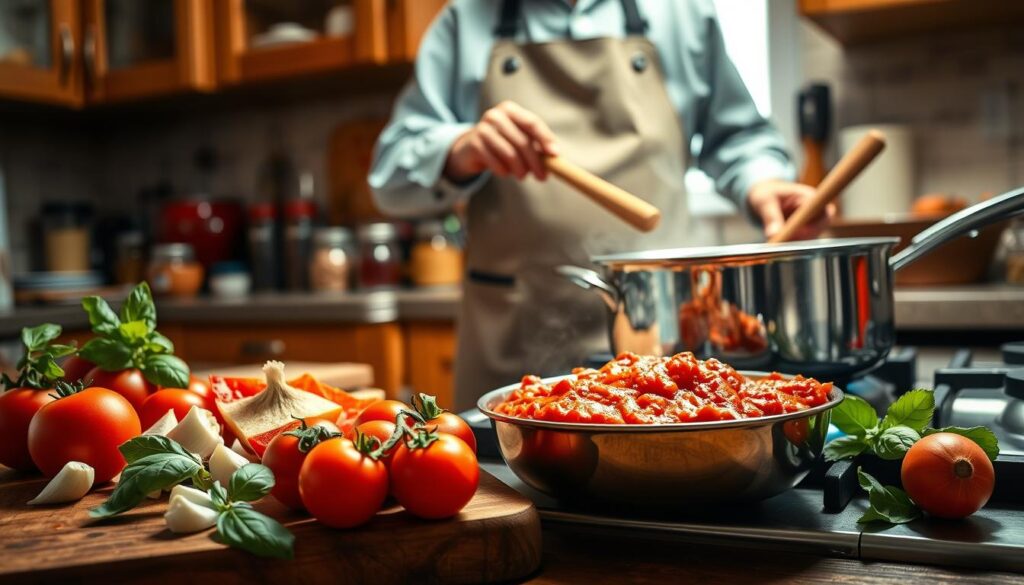
A rich tomato base is crucial for a tasty lasagna sauce. Use top-quality canned tomatoes, like San Marzano, for the best taste. Mix these tomatoes with sautéed onions, garlic, and a pinch of salt for a robust base.
Simmering Tips for Maximum Flavor
Simmering the sauce is where the magic happens. Let the sauce cook slowly over low heat for at least an hour, stirring now and then. This slow cooking blends the flavors and thickens the sauce perfectly.
| Simmering Time | Flavor Profile |
|---|---|
| 30 minutes | Light, fresh flavor |
| 1 hour | Rich, well-balanced flavor |
| 2 hours | Deep, complex flavor |
By following these steps, you’ll make a homemade lasagna sauce that will be a family favorite.
The Classic Lasagna Recipe: Step-by-Step Instructions
Now that you have all the ingredients, it’s time to dive into the classic lasagna recipe. This section will guide you through cooking the lasagna noodles, preparing the cheese mixture, and assembling your layers.
Cooking the Lasagna Noodles
To start, cook your lasagna noodles according to the package instructions until they are al dente. Typically, this involves boiling them in salted water for 8-10 minutes. Once cooked, drain the noodles and set them aside on a clean towel to dry.
Preparing the Cheese Mixture
The cheese mixture is a crucial component of your lasagna. In a large mixing bowl, combine ricotta cheese, parmesan cheese, and a beaten egg. Mix these ingredients until they are smooth and well combined. Season with salt, pepper, and a sprinkle of nutmeg for added depth of flavor.
Assembling Your Layers
Assembling the lasagna is where your dish starts to come together. You’ll need to create multiple layers, starting with a foundation, adding middle layers, and finishing with a top layer.
First Layer: Building Your Foundation
Begin by spreading a thin layer of your homemade lasagna sauce at the bottom of a 9×13-inch baking dish. This prevents the noodles from sticking and adds flavor to the base of your lasagna. Next, arrange 4 lasagna noodles on top of the sauce.
Middle Layers: Creating the Perfect Stack
For the middle layers, you’ll alternate between the cheese mixture, lasagna noodles, and meat sauce. Spread half of the cheese mixture over the noodles, followed by half of the meat sauce. Repeat this process, starting with the noodles, then the remaining cheese mixture, and then the remaining meat sauce.
Top Layer: The Golden Finish
For the top layer, start with a layer of noodles, followed by a layer of meat sauce. Sprinkle a generous amount of mozzarella cheese on top. You can also add some grated parmesan for extra flavor. This layer will give your lasagna a golden, bubbly crust when baked.
| Layer | Ingredients |
|---|---|
| First Layer | Lasagna sauce, noodles |
| Middle Layers | Cheese mixture, noodles, meat sauce |
| Top Layer | Noodles, meat sauce, mozzarella cheese |
Baking Your Lasagna to Perfection
To get that golden-brown crust and perfectly cooked layers, baking your lasagna right is key. The baking step is important. It needs careful attention to make your homemade lasagna just right.
Optimal Temperature and Timing
Baking your lasagna at the right temperature is crucial. Most recipes say to bake at 375°F (190°C). The baking time depends on your lasagna’s size and if it’s covered. A standard 9×13 inch lasagna usually takes 30-45 minutes to bake.
Here’s a basic guideline for baking times:
- Covered lasagna: 30 minutes
- Uncovered lasagna: 10-15 minutes additional
Covering Techniques for Even Cooking
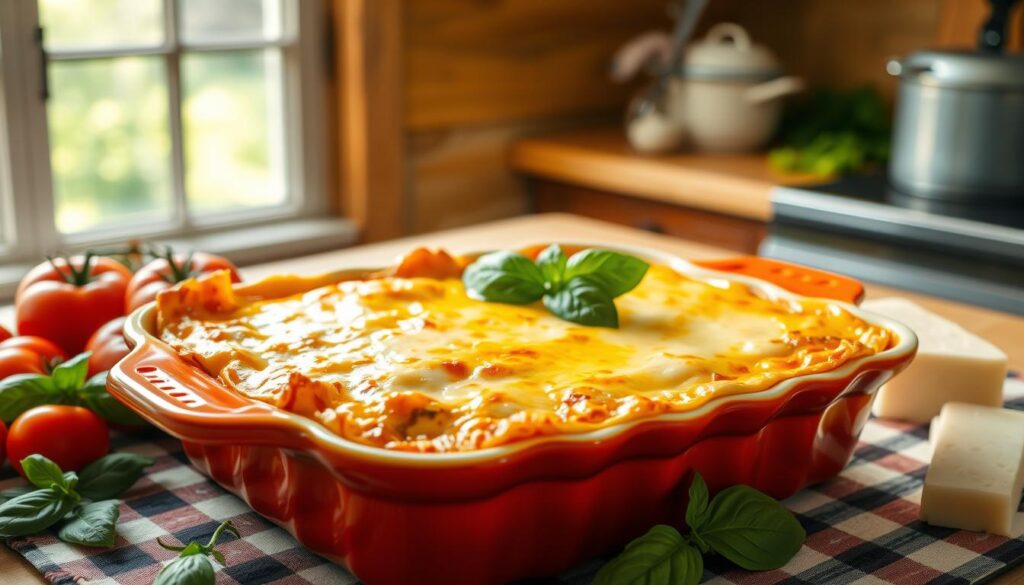
Covering your lasagna while baking keeps the top layer moist. Use aluminum foil to cover it. You can fold the foil to prevent it from sticking to the cheese. Remove the foil for the last 10-15 minutes to let the top brown.
Testing for Doneness
To see if your lasagna is done, look for these signs:
- The cheese is melted and bubbly.
- The edges are golden brown.
- A knife inserted into the center comes out hot to the touch.
If you’re still unsure, check the internal temperature. It should reach165°F (74°C) for safety.
By following these tips, you’ll make a perfectly baked traditional lasagna that will wow everyone.
Lasagna Variations to Try
Exploring lasagna variations is exciting. You can mix different ingredients and flavors. This way, you can make unique lasagna recipes that you’ll love.
Vegetarian Lasagna Options
Vegetarian lasagna is perfect for those who love plant-based meals. You can use spinach, mushrooms, and bell peppers for flavor and texture. Try using eggplant or zucchini instead of noodles for a low-carb option.
A simple vegetarian lasagna can be made with sautéed spinach, ricotta cheese, and marinara sauce. Adding mushrooms or bell peppers can make it even healthier.
Lasagna with Ricotta vs Bechamel Sauce
Choosing between ricotta and bechamel sauce depends on your taste. Ricotta cheese gives a light, Italian flavor. Bechamel sauce makes it creamy and rich.
| Characteristics | Ricotta Cheese | Bechamel Sauce |
|---|---|---|
| Taste | Mild, slightly sweet | Rich, creamy |
| Texture | Light, fluffy | Thick, velvety |
| Preparation | Simple, mix with eggs and seasonings | More complex, requires making a roux |
White Lasagna and Other Creative Twists
White lasagna, or lasagna blanca, uses white sauce instead of tomato sauce. It’s a great choice for something new. You can also try unique twists like using different cheeses or adding truffle oil or prosciutto.
Get creative with your lasagna. Use different pasta types or add spice. You can even include meatballs or sausage for extra flavor.
Tips for Making the Best Lasagna Recipe
To make a memorable homemade lasagna, follow these expert tips. Making the perfect lasagna is more than layering ingredients. It’s about technique, quality, and secrets that make your dish stand out.
Common Mistakes to Avoid
One big mistake is overcooking the noodles. Cook them al dente so they cook a bit more in the oven. Also, don’t skip letting the lasagna rest before serving. This prevents the layers from shifting and the cheese from oozing out too much.
Using low-quality ingredients can ruin your lasagna’s flavor and texture. Choose fresh, high-quality cheese and tomatoes for the best taste.
Secret Ingredients for Extra Flavor
Adding secret ingredients can make your lasagna more complex. Sprinkle nutmeg in your cheese for warmth and depth. Use a mix of mozzarella and parmesan for a rich, melty texture and salty flavor. For extra flavor, add sautéed spinach or mushrooms to your layers.
Here’s a simple table to help you understand the role of different cheeses in lasagna:
| Cheese Type | Role in Lasagna | Flavor Profile |
|---|---|---|
| Mozzarella | Melting and binding layers | Mild, creamy |
| Parmesan | Adding salty flavor and texture | Sharp, salty |
| Ricotta | Adding creaminess and lightness | Mild, slightly sweet |
Make-Ahead Strategies
Making lasagna ahead of time is a lifesaver for busy days. You can assemble it up to a day before and refrigerate it. To freeze, assemble it before baking and thaw it overnight in the fridge before baking.
To freeze, follow these steps:
- Assemble the lasagna in a freezer-safe dish.
- Cover it tightly with plastic wrap or aluminum foil.
- Label and date it.
- When ready to bake, thaw overnight and bake as directed.
Storing and Reheating Your Lasagna
To enjoy your lasagna recipe at its best, follow these storage and reheating tips. Proper storage and reheating techniques are key to keeping your meat lasagna or other variations flavorful and textured.
Refrigeration Guidelines
First, cool your lasagna to room temperature to prevent bacterial growth. Then, cover it tightly with plastic wrap or aluminum foil. Store it in the refrigerator for up to 3 to 5 days.
Here are some key tips for refrigerating lasagna:
- Cool to room temperature before refrigerating.
- Use airtight containers or wrap tightly.
- Label with the date for easy tracking.
Freezing for Future Meals
Freezing is a great way to enjoy your best lasagna recipe later. Assemble the lasagna in a freezer-safe dish, cover it, and then place it in a freezer bag. Frozen lasagna can be stored for up to 3 months.
When you’re ready to eat it, thaw the lasagna overnight in the refrigerator. Then, reheat as needed.
| Storage Method | Duration | Reheating Method |
|---|---|---|
| Refrigeration | 3-5 days | Oven or Microwave |
| Freezing | Up to 3 months | Oven |
Reheating Without Drying Out
To reheat your lasagna without drying it out, cover it with foil. Heat it in the oven at a moderate temperature (around 325°F or 165°C). For a crispy top layer, remove the foil for the last 10-15 minutes.
Here are some additional tips for reheating:
- Cover with foil to prevent drying.
- Use a moderate oven temperature.
- Check for doneness before serving.
Conclusion
Now you know how to make homemade lasagna. This classic recipe is ready to be enjoyed at your dinner table. Follow the steps from this article to create a delicious lasagna with ricotta that everyone will love.
Making lasagna is more than just following a recipe. It’s about sharing love and making memories with those around you. Whether it’s for a weeknight dinner or a special event, your homemade lasagna will impress everyone.
Don’t be afraid to try new things, like vegetarian options or white lasagna. The secret to a great lasagna is using the best ingredients and letting the flavors blend. So, get creative and enjoy making your next lasagna.