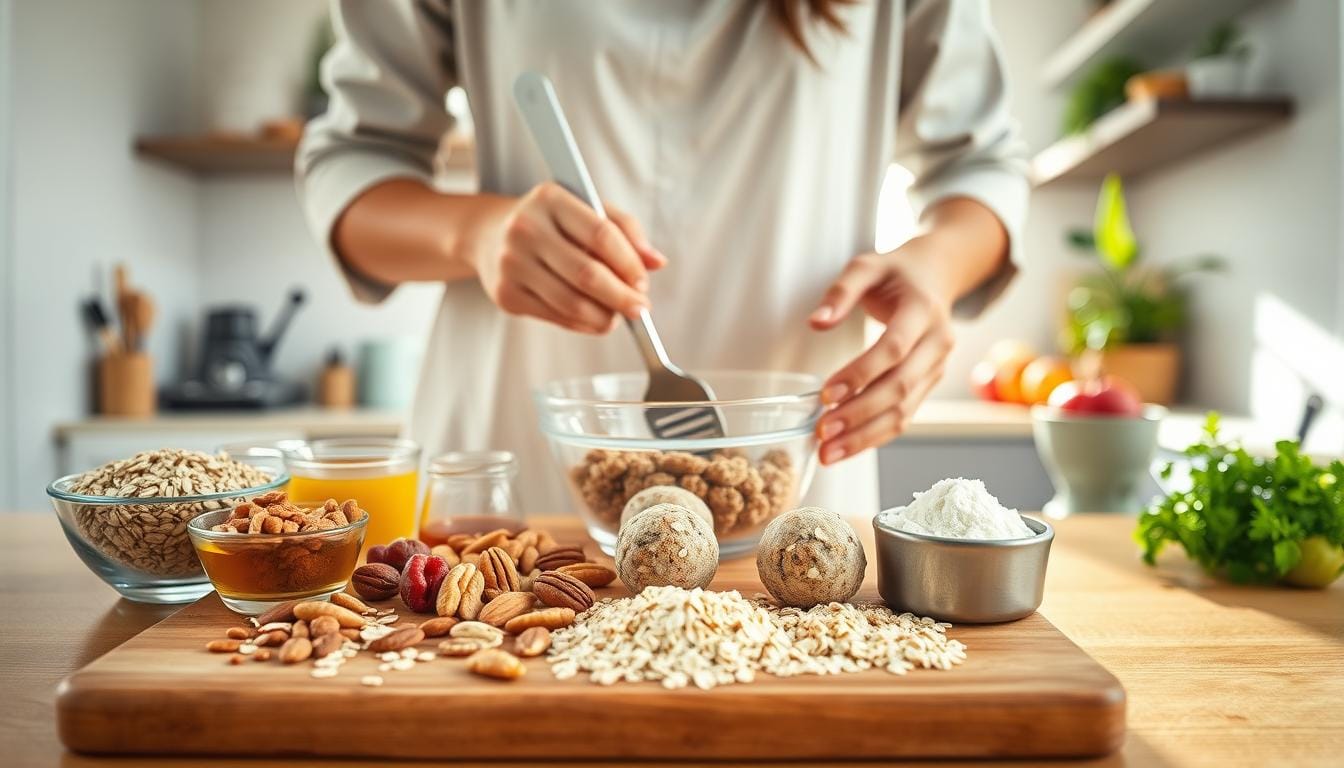
Delicious Protein Ball Recipe for Snacking
Ever looked for a snack that’s sweet and also good for you? Finding something healthy and tasty can be hard in today’s world. But, this delicious protein ball recipe is a simple answer to your energy needs.
These treats are great for people always on the move. You can make them fit your diet or what you have at home. They give you a nutritious punch that keeps you full and sharp all day.
In this guide, you’ll learn how to make the perfect protein balls. We’ll show you how a basic protein balls recipe can change your snacking habits. Get ready to learn a kitchen skill that’s good for your whole family.
Table of Contents
Why Protein Balls Are the Perfect Snack for Your Lifestyle
Protein balls are a hit among fitness fans for their health perks. These healthy energy bites taste great and are full of nutrients. They’re perfect for a quick energy lift or to help muscles recover.
Protein balls are great because you can make them your way. You can pick ingredients that fit your diet. This makes them perfect for athletes and anyone wanting a healthier snack.
The Nutritional Benefits of Homemade Protein Balls
Making your own protein balls means you control what goes in them. You can avoid additives and preservatives found in store-bought snacks. A protein ball usually has proteins, healthy fats, and carbs.
Here’s what a basic protein ball recipe might look like:
| Nutrient | Amount per Protein Ball |
|---|---|
| Protein | 10g |
| Healthy Fats | 8g |
| Carbohydrates | 15g |
| Fiber | 3g |
How Protein Balls Support Your Health Goals
Protein balls help with different health and fitness goals. They’re great for a quick snack or to help recover after working out.
Energy Boost for Busy Days
For those with tight schedules, protein balls offer a quick energy boost. They have carbs, fats, and protein to keep you going longer.
Muscle Recovery After Workouts
After exercising, your body needs nutrients to heal and build muscle. High protein snacks like protein balls are key. They give your muscles the protein they need to repair and grow.
Essential Ingredients for Your Protein Balls Recipe
Creating protein balls that are both healthy and delicious starts with knowing the right ingredients. The beauty of making your own protein balls is that you can adjust the ingredients to fit your diet and taste.
Base Ingredients You’ll Need
The base of your protein balls gives them texture and shape. It’s important to pick ingredients that taste great and are good for you.
Oats and Whole Grains
Oats are a key ingredient in many protein ball recipes. They’re high in fiber and help hold the ingredients together. You can use rolled oats or steel-cut oats for different textures. Adding quinoa or amaranth can also boost the nutrition.
Nut Butters and Seed Butters
Nut butters and seed butters act as binders and add flavor. Favorites include peanut butter, almond butter, and sunflower seed butter. These are packed with healthy fats and protein, making them great for protein balls.
Protein Sources to Choose From
Protein is key in protein balls, helping muscles and keeping you full. You have many options to add protein to your mix.
Protein Powder Options
Whey protein and pea protein are top picks for protein powder. They mix well and add a lot of protein. You can pick unflavored or flavored, based on what you like.
Natural Protein Additions
You can also add natural proteins like chia seeds, hemp seeds, or collagen peptides. These not only add protein but also make your protein balls more nutritious.
Natural Sweeteners and Binding Agents
To sweeten and bind your ingredients, use natural sweeteners and binding agents. Honey, maple syrup, and dates are good for sweetness. Coconut oil or egg whites help hold everything together.
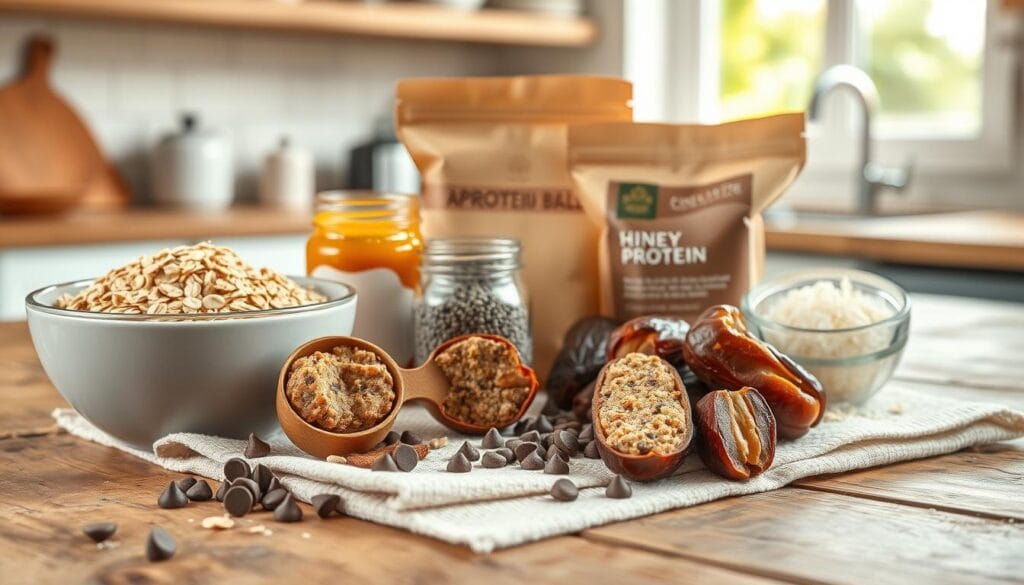
By mixing these ingredients in different ways, you can make many types of protein balls. This lets you match your taste and dietary needs.
Kitchen Tools and Equipment for Making Protein Balls
To make protein balls, you need some basic kitchen tools. The right equipment makes the process easier and more fun. This way, you can focus on making tasty easy no bake protein balls.
Making quick protein ball recipes doesn’t need a lot of kitchen stuff. But, having some basic tools helps a lot.
Must-Have Tools
First, you’ll need some basic kitchen tools. These are:
- A large mixing bowl to combine your ingredients
- A measuring cup and spoons for accurate measurements
- A spoon or spatula for mixing
- A surface for shaping the protein balls
Culinary experts say, “The right tools make cooking easier and improve your dishes.”
“The right tool can make a significant difference in the kitchen, turning a daunting task into a simple one.”
Optional Equipment for Easier Prep
While you can make protein balls with just the basics, some extra tools can help a lot. You might want to use:
- A cookie scoop to portion out uniform protein balls
- A food processor to grind nuts or seeds
- A silicone baking mat for easy cleanup
| Tool | Purpose | Essential/Optional |
|---|---|---|
| Large Mixing Bowl | Combining ingredients | Essential |
| Measuring Cup/Spoons | Accurate measurements | Essential |
| Spoon/Spatula | Mixing ingredients | Essential |
| Cookie Scoop | Portioning uniform balls | Optional |
| Food Processor | Grinding nuts/seeds | Optional |
With these tools, you’ll be ready to make lots of easy no bake protein balls and quick protein ball recipes easily.
Step-by-Step Protein Balls Recipe
To make tasty protein balls, follow this easy guide. Making them at home is simple. You just need basic ingredients and tools. This recipe will help you make healthy snacks quickly.
Preparing Your Ingredients
First, prepare your ingredients well. This step is key for the right texture and taste of your protein balls.
Measuring and Organizing
Start by measuring your ingredients accurately. Use a digital scale for protein powder and other key items. Keep your ingredients in separate bowls for a smooth mix.
Bringing Ingredients to Room Temperature
Let refrigerated items like nut butters or eggs warm up. This ensures a uniform mix and better texture.
Mixing the Base
Now, mix the base of your protein balls. Combine dry and wet ingredients in the right order.
Combining Dry Ingredients
In a big bowl, mix dry ingredients like oats, protein powder, and more. Make sure they’re well mixed.
Adding Wet Ingredients
Then, add wet ingredients like nut butters, honey, or eggs. Use a spoon or stand mixer for a dough-like texture.
Forming Perfect Protein Balls
When your mix is ready, shape it into balls. You can choose any size and shape you like.
Shaping Techniques
Use your hands or a cookie scoop to shape the mix. Apply gentle pressure to avoid making the balls dense.
Size Consistency Tips
Try to make your protein balls the same size. This helps them chill and set evenly.
Chilling and Setting
Place your protein balls on a baking sheet lined with parchment paper. Refrigerate them to set.
Chilling makes the balls firm and easier to handle. It also blends the flavors, making them taste better.
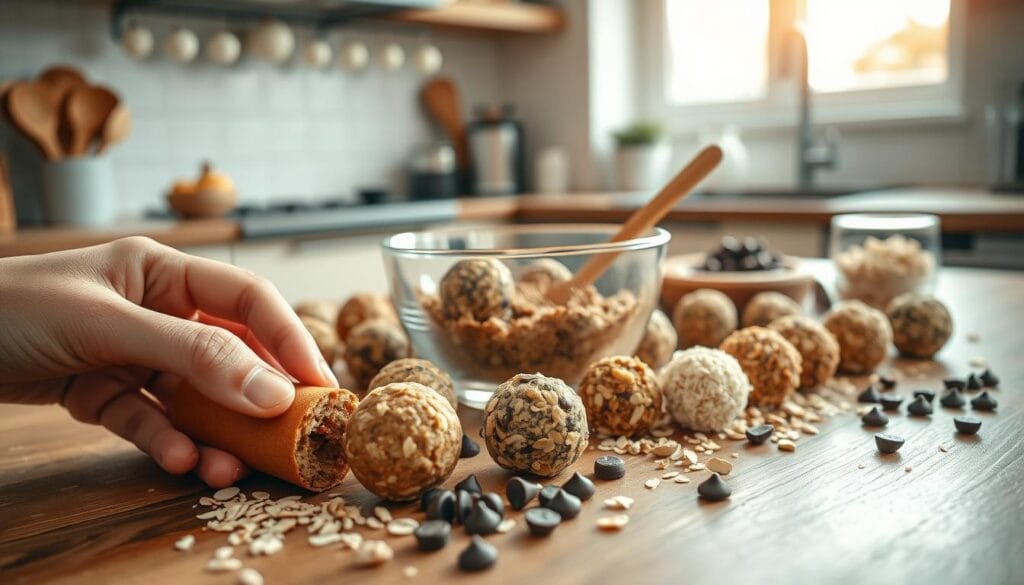
Delicious Protein Ball Variations to Try
Explore the exciting world of protein ball variations you can make at home. These snacks are not just healthy; they can also be tasty treats. The right ingredients and flavors make all the difference.
Chocolate Peanut Butter Protein Balls
Chocolate and peanut butter is a timeless favorite. To make these protein balls, mix rolled oats, peanut butter, protein powder, and chocolate chips.
Ingredients and Instructions
To make chocolate peanut butter protein balls, combine 2 scoops of protein powder, 1/4 cup of creamy peanut butter, 1/4 cup of rolled oats, and 1/4 cup of chocolate chips. Mix until a dough forms. Then, roll into balls and refrigerate until firm.
Mark Thompson, a fitness enthusiast, loves these protein balls. He says, “The peanut butter and chocolate taste is so satisfying.”
Coconut Almond Energy Bites
Try coconut almond energy bites for a tropical twist. These protein balls have shredded coconut and almond butter for a unique taste.
Tropical Flavor Combinations
Add dried pineapple or mango for a tropical flavor. Mix these fruits with shredded coconut, almond butter, and protein powder.
Cookie Dough Protein Balls
Enjoy cookie dough without the guilt. Cookie dough protein balls are a fun, healthy snack.
Creating That Cookie Dough Taste
Use rolled oats, protein powder, almond butter, and chocolate chips for the cookie dough taste. Add a pinch of salt for extra flavor.
A study in the
Journal of Food Science
found that natural sweeteners and binding agents improve protein snack taste and texture.
Gluten-Free Protein Ball Options
Making gluten-free protein balls is easy. It’s great for those with gluten intolerance or sensitivity.
Certified Gluten-Free Ingredients
Use certified gluten-free oats and choose a gluten-free protein powder. Some protein powders may have gluten, so pick a certified gluten-free brand.
| Brand | Gluten-Free Status |
|---|---|
| Brand A | Certified Gluten-Free |
| Brand B | Not Gluten-Free |
| Brand C | Certified Gluten-Free |
Customizing Your Protein Balls for Dietary Needs
Whether you’re vegan, keto, or have other dietary restrictions, you can enjoy delicious protein balls tailored to your needs. It’s easy to customize your protein balls. This way, everyone can enjoy these healthy snacks.
Vegan Protein Ball Adaptations
Adapting protein balls for a vegan diet is straightforward. Focus on plant-based protein sources and vegan-friendly binding agents.
Plant-Based Protein Sources
Pea protein, hemp protein, or brown rice protein are great alternatives to traditional protein powders. They provide a good protein boost and are easily digestible.
Vegan Binding Alternatives
Use maple syrup, coconut oil, or nut butters to bind your protein balls. These alternatives are vegan-friendly and add unique flavors.
Low-Carb and Keto-Friendly Options
For a low-carb or keto diet, watch the carb content of your protein balls. Use almond flour or coconut flour instead of oats to reduce carbs.
Here’s a comparison of different flours:
| Flour Type | Carb Content per 100g | Suitability for Keto Diet |
|---|---|---|
| Oat Flour | 68g | No |
| Almond Flour | 6.7g | Yes |
| Coconut Flour | 13.3g | Yes, in moderation |
Nut-Free Alternatives
For individuals with nut allergies or intolerances, seed butters offer a fantastic alternative.
Seed Butter Substitutions
Sunflower seed butter and tahini are excellent substitutes for peanut butter or almond butter. They provide a similar creamy texture and can be used in the same quantities.
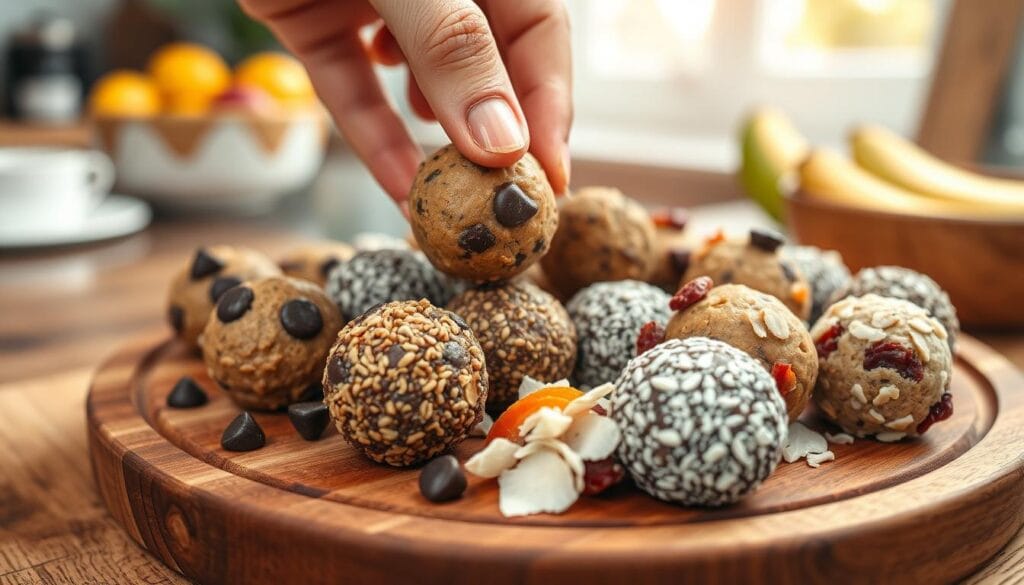
By making these simple adjustments, you can enjoy protein balls that are not only delicious but also tailored to your specific dietary needs. Whether you’re looking for vegan protein snack ideas or healthy energy bites, customizing your protein balls is a great way to ensure you’re getting the nutrients you need while adhering to your dietary preferences.
Storage Tips for Maximum Freshness
To keep your homemade protein balls fresh, proper storage is key. Whether you’re making a batch for the week or a large quantity for later, knowing how to store them right is crucial. It affects their taste, texture, and freshness.
Refrigerator Storage Guidelines
Storing your protein balls in the fridge is a good way to keep them fresh for a bit. To do this, follow a few simple steps.
Proper Container Selection
Choose an airtight container for storing your protein balls. This keeps air, moisture, and contaminants out. Use glass or plastic containers with tight-fitting lids.
How Long Protein Balls Stay Fresh
Properly stored in the fridge, your protein balls can last up to 7-10 days. But, this can change based on the ingredients and how well the container is sealed.
| Storage Method | Freshness Duration |
|---|---|
| Refrigerator Storage | 7-10 days |
| Freezer Storage | Up to 3 months |
Freezing Protein Balls for Long-Term Storage
Freezing is great for long-term storage. It keeps the texture and flavor of your protein balls intact.
Freezing Methods
To freeze, place them on a baking sheet lined with parchment paper. Put it in the freezer until firm. Then, move them to a freezer-safe bag or airtight container for storage.
Thawing Instructions
When you want to eat your frozen protein balls, take out what you need. Let them thaw at room temperature for a few minutes or refrigerate overnight.
Serving Suggestions and Portion Sizes
Protein balls are great for any time, whether you need a pre-workout boost or a snack to keep you going. They’re perfect for before, after, or in between meals. You can adjust them to meet your health goals and schedule.
Best Times to Enjoy Your Protein Balls
Timing is key for getting the most out of your protein balls. Here are the best times to enjoy them:
Pre-Workout Fuel
Eat a protein ball 30 minutes before working out. It gives you energy and helps your muscles. Look for ones with carbs and protein for the best results.
Post-Workout Recovery
After working out, eat a protein ball in 30-60 minutes. It helps your muscles recover and grow. The mix of protein and carbs is great for energy and repair.
Midday Snack Ideas
Protein balls are great for a midday snack. They’re filling and give you energy. They’re also easy to take with you, perfect for busy days.
How Many Protein Balls Should You Eat
The number of protein balls you should eat varies. Start with one to two per serving. Here’s a guide for different needs:
- Athletes or those with high protein requirements: 2-3 protein balls per serving
- Individuals looking for a snack: 1 protein ball per serving
- Those on a calorie-restricted diet: 1 small protein ball per serving
Adjust the amount based on your health goals and diet. Remember to think about your daily protein and calorie intake when deciding how many protein balls to eat.
Troubleshooting Common Protein Ball Problems
Making protein balls can be a bit of a challenge. But, with some tips, you’ll soon get the hang of it. Whether you’re new or experienced, problems can pop up. These can mess with the texture, taste, or quality of your protein balls.
Fixing Mixture That’s Too Dry or Too Wet
The right mix is key. If it’s too dry, they won’t stick together. Too wet, and they won’t set right.
Adding Moisture Without Changing Texture
For a dry mix, add a bit of honey or nut butter. Start with a teaspoon and mix well before adding more.
Absorbing Excess Liquid
Too wet? Add some oats or protein powder. This absorbs the extra moisture. But, don’t add too much to avoid dryness.
Preventing Protein Balls from Falling Apart
Protein balls falling apart? It’s often because of not enough binding agent.
Binding Agent Solutions
The right binding agent makes a big difference. Nut butters, honey, and coconut oil work well. Try different ones to see what works best for you.
| Binding Agent | Effectiveness | Tips |
|---|---|---|
| Nut Butters | High | Use creamy versions for better binding. |
| Honey | Medium | Start with a small amount to avoid overly sticky mixture. |
| Coconut Oil | Low | Best used in combination with other binding agents. |
Adjusting Sweetness and Flavor
You can tweak the sweetness and flavor of your protein balls. It’s all about what you like.
Balancing Sweet and Savory Elements
Too sweet? Add some salt or unsweetened cocoa powder. Not sweet enough? A bit more honey or maple syrup can help.
By tackling these common problems, you’ll make tasty and healthy protein balls. They’ll match your diet and taste preferences perfectly.
Conclusion
You now have a complete guide to making tasty and healthy protein balls. This simple recipe lets you enjoy nutritious bites on the go.
We’ve talked about the good stuff in protein balls. They’re full of nutrients and can fit into many diets. You can make them vegan, low-carb, or without nuts, depending on what you like.
Adding protein balls to your day can make snacking easy and healthy. Try new flavors and ingredients to keep things exciting. These bites will help you stay energized and focused all day long.