Lemon Balm Recipe: Enjoy the Refreshing Taste of This Herb
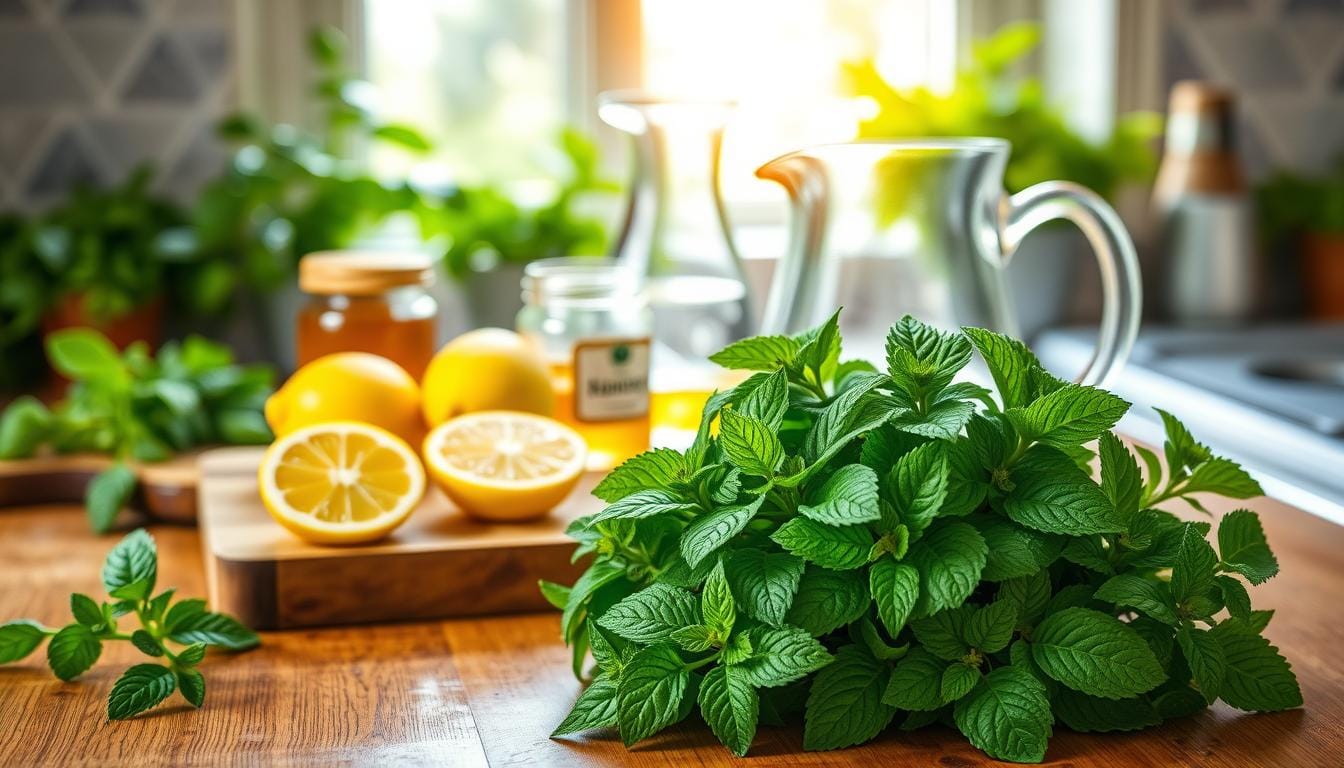
Did you know bees can smell this herb from miles away? It’s amazing for a plant many overlook. You can make a refreshing citrus-kissed drink from its vibrant leaves.
This no-cook infusion captures the herb’s bright scent and gentle tones. It’s a simple way to enjoy nature’s gift on a warm day. With this lemon balm recipe, you get a crisp, clean taste that store-bought juices can’t match.
The cooling leaves offer instant relief on sunny days. This method keeps the essential oils in the leaves. It makes a drink that’s healthy and satisfying for everyone.
Table of Contents
What Is Lemon Balm and Why You’ll Love Cooking with It
Lemon balm has a soft lemon taste that makes it great for many recipes. It’s part of the mint family and adds a gentle lemon flavor. This makes it perfect for drinks and other tasty dishes.
Not only does lemon balm add flavor, but it also has lemon balm benefits. Its light citrus taste is great in salads, soups, and sauces. It doesn’t overpower other ingredients.
Here are some reasons why lemon balm is loved by chefs and home cooks:
- A subtle lemon flavor that complements a wide range of dishes
- Versatility in both sweet and savory recipes
- The ability to be used fresh or dried, depending on the desired intensity of flavor
- Pairing well with ingredients like garlic, herbs, and citrus
Cooking with lemon balm is easy. You can add it to your favorite recipes at different times. Adding it towards the end keeps its flavor light. Adding it earlier lets it blend deeper into the dish.
Whether you’re making a refreshing drink, a hearty meal, or a sweet dessert, lemon balm is a great choice. Its unique taste and lemon balm benefits make it a herb to try in your kitchen.
Lemon Balm Benefits: More Than Just Great Flavor
Lemon balm is more than just a tasty herb. It offers many benefits for your body and mind. Adding it to your daily life can improve your overall health.
Lemon balm tea is packed with natural goodness. It’s good for both your body and mind. You can use it in many ways to boost your health.
Calming and Stress-Relief Properties
Lemon balm is known for its calming effects. It can help reduce stress and promote relaxation. Its natural compounds work with your brain to create a soothing effect.
Key benefits of lemon balm for stress relief include:
- Reducing anxiety and stress levels
- Promoting a good night’s sleep
- Improving mood and overall sense of well-being
Digestive Health Support
Lemon balm also supports your digestive health. It can ease discomfort and help maintain a balanced gut. Its anti-inflammatory properties can soothe digestive problems.
| Digestive Benefits | Description |
|---|---|
| Eases discomfort | Lemon balm helps alleviate digestive issues such as bloating and cramps. |
| Anti-inflammatory properties | The herb’s anti-inflammatory properties can help reduce inflammation in the digestive tract. |
| Promotes balance | Lemon balm supports a balanced gut, contributing to overall digestive health. |
Antioxidant and Immune Benefits
Lemon balm is also rich in antioxidants. These protect your body from harmful free radicals. This helps support your immune system, keeping you healthy and strong.
By adding lemon balm to your diet, you can boost your immune system. Enjoy its many health benefits.
Classic Lemon Balm Tea Recipe
Try brewing a cup of lemon balm tea for a simple yet delightful drink. It has a light, citrusy flavor and many health benefits. It’s great for relaxation and can be enjoyed any time of day.
Ingredients You’ll Need
To make lemon balm tea, you need a few things:
- 2 tablespoons of fresh lemon balm leaves (or 1 tablespoon of dried leaves)
- 1 cup of boiling water
- Honey or lemon to taste (optional)
Brewing Instructions
Making lemon balm tea is easy. Just follow these steps:
- Put the fresh or dried lemon balm leaves into a teapot or infuser.
- Pour boiling water over the leaves.
- Let it steep for 5-10 minutes, depending on how strong you like it.
- Strain the tea into a cup and add honey or lemon if you want.
Hot and Iced Variations
Lemon balm tea is great both hot and iced. For hot, drink it right away. For iced, cool it down, then chill it in the fridge. Serve over ice and add fresh lemon balm leaves or a lemon slice.
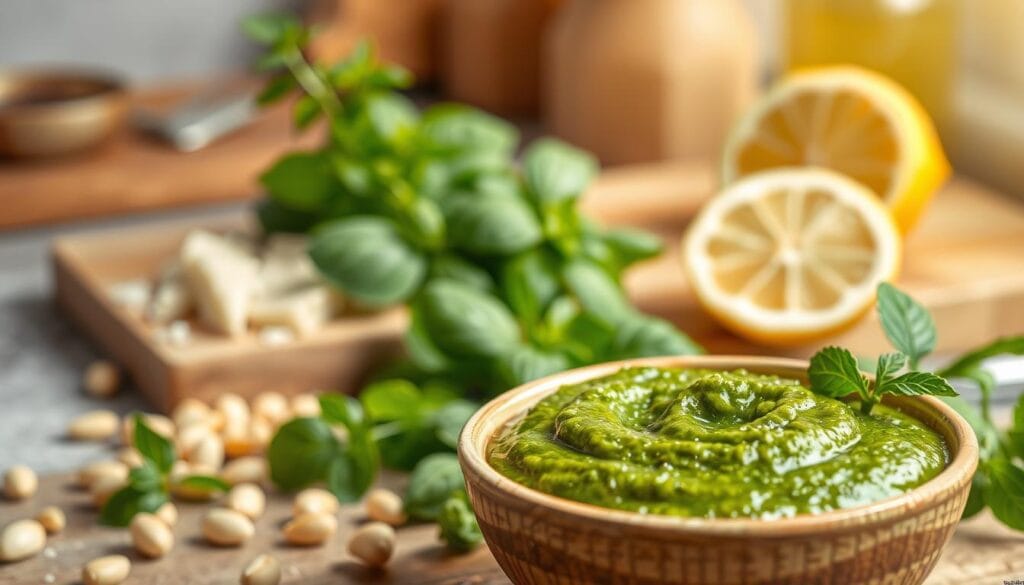
Fresh Lemon Balm Pesto Recipe
Lemon balm pesto is a fresh and versatile condiment. It adds a burst of freshness to many dishes. As Giovanni Rando, an Italian chef, once said,
“Pesto is not just a sauce, it’s a way to bring people together.”
Using lemon balm in pesto gives a unique twist to the classic basil version.
Pesto Ingredients
To make delicious lemon balm pesto, you’ll need:
- 1 cup fresh lemon balm leaves
- 1/2 cup pine nuts or walnuts
- 1/2 cup grated Parmesan cheese
- 1/2 cup extra virgin olive oil
- 2 cloves garlic, minced
- Salt, to taste
- 1 tablespoon freshly squeezed lemon juice
Step-by-Step Preparation
Preparing lemon balm pesto is easy.
- Rinse the lemon balm leaves and pat them dry.
- In a food processor, combine the lemon balm leaves, nuts, and garlic. Process until well combined.
- Add the Parmesan cheese and process until incorporated.
- With the processor running, slowly pour in the olive oil.
- Season with salt and add the lemon juice.
- Process until you get the desired consistency.
Ways to Use Your Lemon Balm Pesto
Lemon balm pesto is very versatile. You can use it as a pasta sauce, a veggie dip, or a sandwich spread. It’s also great on grilled meats or fish. The citrusy flavor of lemon balm pairs well with many dishes, making it a great addition to your cooking.
Herb-Roasted Lemon Balm Chicken Recipe
Try our Herb-Roasted Lemon Balm Chicken Recipe for a dish that’s both aromatic and flavorful. It combines lemon balm’s brightness with herbs’ richness. This makes for a truly mouth-watering experience. “The secret to a great roasted chicken lies in the blend of herbs and the freshness of the ingredients,” says a renowned chef. Lemon balm adds a special touch, making it perfect for any occasion.
Chicken Ingredients
To make this delicious Herb-Roasted Lemon Balm Chicken, you’ll need the following ingredients:
- 1 whole chicken (3-4 lbs)
- 1/4 cup fresh lemon balm leaves
- 2 tbsp olive oil
- 2 cloves garlic, minced
- 1 tsp dried thyme
- 1 tsp dried rosemary
- Salt and pepper to taste
- 1 lemon, quartered
Cooking Instructions
Follow these steps to prepare your Herb-Roasted Lemon Balm Chicken:
- Preheat your oven to 425°F (220°C).
- Rinse the chicken and pat it dry.
- Mix olive oil, minced garlic, chopped lemon balm, thyme, rosemary, salt, and pepper in a bowl.
- Rub the mixture all over the chicken, making sure to get some under the skin as well.
- Stuff the chicken cavity with quartered lemon and additional lemon balm leaves if desired.
- Place the chicken in a roasting pan and roast for about 45-50 minutes or until the internal temperature reaches 165°F (74°C).
- Let the chicken rest for 10-15 minutes before carving.
Serving Recommendations
Serve your Herb-Roasted Lemon Balm Chicken with roasted vegetables or a fresh salad for a well-rounded meal. For an added touch, garnish with fresh lemon balm leaves.
Wine Pairing Suggestions
A dry white wine such as Sauvignon Blanc or Pinot Grigio pairs beautifully with this dish. For those who prefer red wine, a light-bodied Pinot Noir can complement the flavors without overpowering them.
Lemon Balm Dessert Recipe: Honey Lemon Balm Ice Cream
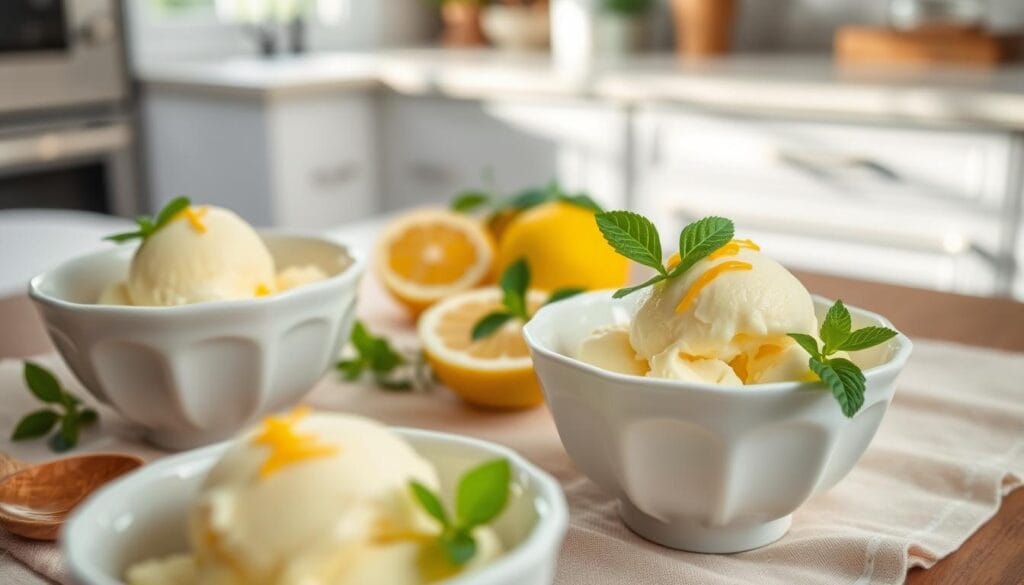
Try our honey lemon balm ice cream for a sweet treat. It mixes lemon balm’s citrus with honey’s richness. This dessert is both soothing and refreshing.
Ice Cream Ingredients
Here’s what you need for this ice cream:
- 2 cups heavy cream
- 1 cup whole milk
- 1/2 cup granulated sugar
- 1/4 cup honey
- 1/4 cup fresh lemon balm leaves
- 1 tsp vanilla extract
Preparation Method
Here’s how to make this ice cream:
- Mix heavy cream, whole milk, and sugar in a saucepan. Heat it until the sugar dissolves and it’s hot but not boiling.
- Remove it from heat and add lemon balm leaves. Let it steep for 30 minutes to infuse the flavor.
- Strain the mixture through a fine-mesh sieve into a clean container. Press on the solids to get as much liquid as you can. Throw away the solids.
- Add honey and vanilla extract to the mixture. Stir until the honey is dissolved.
- Chill the mixture in the fridge until it’s cold. Then, churn it in an ice cream maker following the manufacturer’s instructions.
Other Lemon Balm Dessert Ideas
Lemon balm is great in many desserts, not just ice cream. Here are some ideas to start with:
Lemon Balm Shortbread Cookies
Add chopped lemon balm to your shortbread dough. It gives a subtle citrus flavor that goes well with butter.
Lemon Balm Pound Cake
A lemon balm pound cake is moist and flavorful. Just add chopped lemon balm leaves to your favorite recipe for a refreshing twist.
| Dessert | Main Ingredients | Preparation Time |
|---|---|---|
| Honey Lemon Balm Ice Cream | Heavy cream, whole milk, sugar, honey, lemon balm | 2 hours |
| Lemon Balm Shortbread Cookies | Butter, sugar, flour, lemon balm | 45 minutes |
| Lemon Balm Pound Cake | Butter, sugar, eggs, flour, lemon balm | 1 hour 30 minutes |
Refreshing Lemon Balm Cocktail Recipe and Mocktail
Make your summer parties more fun with a lemon balm cocktail. It’s easy to make and tastes great. Lemon balm adds a citrusy flavor that goes well with many drinks.
Cocktail Ingredients
Here’s what you need for a tasty lemon balm cocktail:
- 2 oz Gin or Vodka
- 1 oz Fresh lemon juice
- 1/2 oz Simple syrup
- 1/4 oz Lemon balm syrup (see below for recipe)
- Handful of fresh lemon balm leaves for garnish
- Ice
- Soda water
Lemon Balm Syrup Recipe: Mix 1 cup water, 1 cup sugar, and 1/4 cup fresh lemon balm leaves in a saucepan. Heat until the sugar melts. Let it steep for 10 minutes. Strain and cool it down.
Mixing and Garnishing
Here’s how to make your cocktail:
- Muddle a few lemon balm leaves with simple syrup in a shaker.
- Add gin or vodka, lemon juice, and lemon balm syrup.
- Fill the shaker with ice and shake hard.
- Strain into a chilled glass with ice.
- Top with soda water and garnish with lemon balm.
Non-Alcoholic Version
For a mocktail, skip the gin or vodka. Add more lemon balm syrup or simple syrup to taste. You can also add more soda water for a lighter taste.
| Drink Version | Main Ingredients | Taste Profile |
|---|---|---|
| Cocktail | Gin/Vodka, Lemon Juice, Lemon Balm Syrup | Refreshing, Citrusy, Slightly Sweet |
| Mocktail | Lemon Juice, Lemon Balm Syrup, Soda Water | Light, Refreshing, Herbal |
How to Make Lemon Balm Oil for Cooking and Wellness
Make your own lemon balm oil to enjoy its refreshing flavor and health benefits. This method involves soaking a carrier oil in the herb’s essence. The result is a versatile oil for cooking and wellness.
What You’ll Need
To begin, gather these basic items:
- Fresh or dried lemon balm leaves
- A clean glass jar with a lid
- A carrier oil (like olive, coconut, or jojoba oil)
- Cheesecloth or a coffee filter
Oil Infusion Process
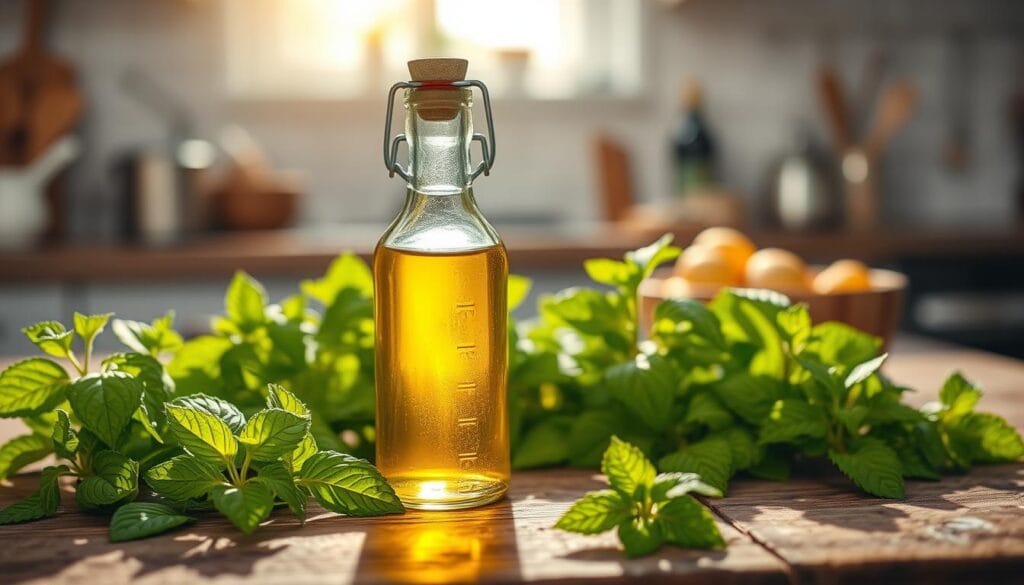
The infusion process is easy. Start by filling a glass jar with lemon balm leaves, leaving an inch at the top. Next, pour the carrier oil over the leaves, making sure they’re fully covered. Close the jar and keep it in a cool, dark place for 2-4 weeks. Shake it gently every few days.
After the infusion, strain the mixture through cheesecloth or a coffee filter into another clean container. Throw away the solids. Store the lemon balm oil in a dark glass bottle.
Culinary and Topical Uses
Lemon balm oil has many uses. In the kitchen, it adds a light lemon taste to food. For skin care, it’s calming and full of antioxidants. Always mix it with a carrier oil before applying to the skin, as it’s quite strong.
Creative Lemon Balm Uses in Everyday Cooking
You can use lemon balm in many ways in your cooking. It adds a fresh taste and health benefits to your meals. It’s great in salads, soups, drinks, and desserts.
Enhancing Salads and Dressings
Lemon balm is great in salads and dressings. Just chop the leaves and add them to your salad for a citrus kick. Mix it with olive oil, lemon juice, and salt for a tasty dressing.
Tip: Try mixing lemon balm with mint and basil for a summer salad dressing.
Adding to Soups and Sauces
Lemon balm adds depth to soups and sauces. It’s perfect in clear soups like chicken or vegetable broth. Add it to creamy soups at the end to keep its flavor.
In sauces, it’s good with fish and poultry. Add it to beurre blanc or cream sauce for a citrus touch.
Flavoring Beverages and Smoothies
Lemon balm is refreshing in drinks and smoothies. Make a soothing tea by steeping the leaves in hot water. Or, add it to cold water for a cool drink. It’s also great in smoothies, like those with lemon or orange.
“Lemon balm is not just for tea; it’s a versatile ingredient that can brighten up any drink.” – A culinary expert once noted, highlighting the herb’s versatility.
To add lemon balm to smoothies, just blend it with your favorite fruits and a bit of honey.
- Add lemon balm to your favorite lemonade recipe for a twist on a classic drink.
- Mix lemon balm with cucumber and mint for a refreshing summer drink.
- Use lemon balm to make a flavorful herbal tea that’s perfect for relaxation.
How to Store and Preserve Fresh Lemon Balm
To enjoy lemon balm all year, knowing how to store and preserve it is key. You can keep fresh lemon balm leaves in several ways, each with its own benefits.
Drying Lemon Balm Leaves
Drying is a simple and effective way to keep lemon balm. Tie the leaves in small bunches and hang them upside down in a warm, dry place. Or, use a dehydrator or oven on the lowest heat setting.
Store the dried leaves in airtight containers to keep their flavor and aroma. Dried lemon balm is great for teas, soups, and stews.
Freezing for Long-Term Storage
Freezing is another excellent way to preserve lemon balm. Chop the leaves and freeze them in ice cube trays with a little water or olive oil. This makes it easy to add them to your recipes.
Freezing keeps the herb’s flavor and nutrients. It’s perfect for cooked dishes and beverages.
Making Lemon Balm Butter
Making lemon balm butter is a great way to preserve the herb and make a versatile ingredient. Mix softened butter with chopped lemon balm leaves and a pinch of salt.
The lemon balm butter can be stored in the refrigerator or freezer. It’s great for spreading on bread, using in sauces, or as a finishing touch for vegetables and meats.
| Preservation Method | Best Use | Storage |
|---|---|---|
| Drying | Teas, soups, stews | Airtight containers |
| Freezing | Cooked dishes, beverages | Ice cube trays, freezer bags |
| Lemon Balm Butter | Cooking, baking, spreads | Refrigerator, freezer |
Growing Lemon Balm in Your Garden or Container
Growing lemon balm is easy, whether you have a big garden or a small balcony. It’s a versatile herb that does well in many conditions.
Planting Requirements and Care
To grow lemon balm well, know its needs and care for it. It likes well-drained soil and partial shade to full sun. It grows best in soil rich with organic matter.
Water it regularly but avoid too much water. Pruning often helps it grow bushy and prevents it from getting too long.
Harvesting Your Lemon Balm
Harvesting lemon balm is simple. The best time is in the morning, after the dew but before it gets hot. This is when the leaves smell the best.
Just cut off the leaves with scissors or pinch them off. You can take leaves or stems, depending on what you need.
Controlling Growth and Spreading
Lemon balm can grow a lot and spread. To stop it, plant it in containers. This keeps it from taking over your garden.
Pruning regularly helps it grow well and keeps it from spreading too much. You can use the cut leaves in cooking or make lemon balm tea.
| Aspect | Details |
|---|---|
| Soil Preference | Well-drained, rich in organic matter |
| Sunlight | Partial shade to full sun |
| Watering | Regular, avoiding waterlogging |
| Pruning | Regular pruning for bushy growth and to control spread |
| Harvesting | Morning, after dew dries |
Conclusion
You now have many lemon balm recipe ideas to make your meals and drinks better. This herb brings a special taste and health perks like calming effects and helping with digestion. Adding lemon balm to your cooking lets you try new flavors and boost your health.
Start by trying out lemon balm tea, pesto, or infused oil. You’ll find your top ways to enjoy this versatile herb. With its simple growth and many uses, lemon balm will quickly become a key ingredient in your kitchen.