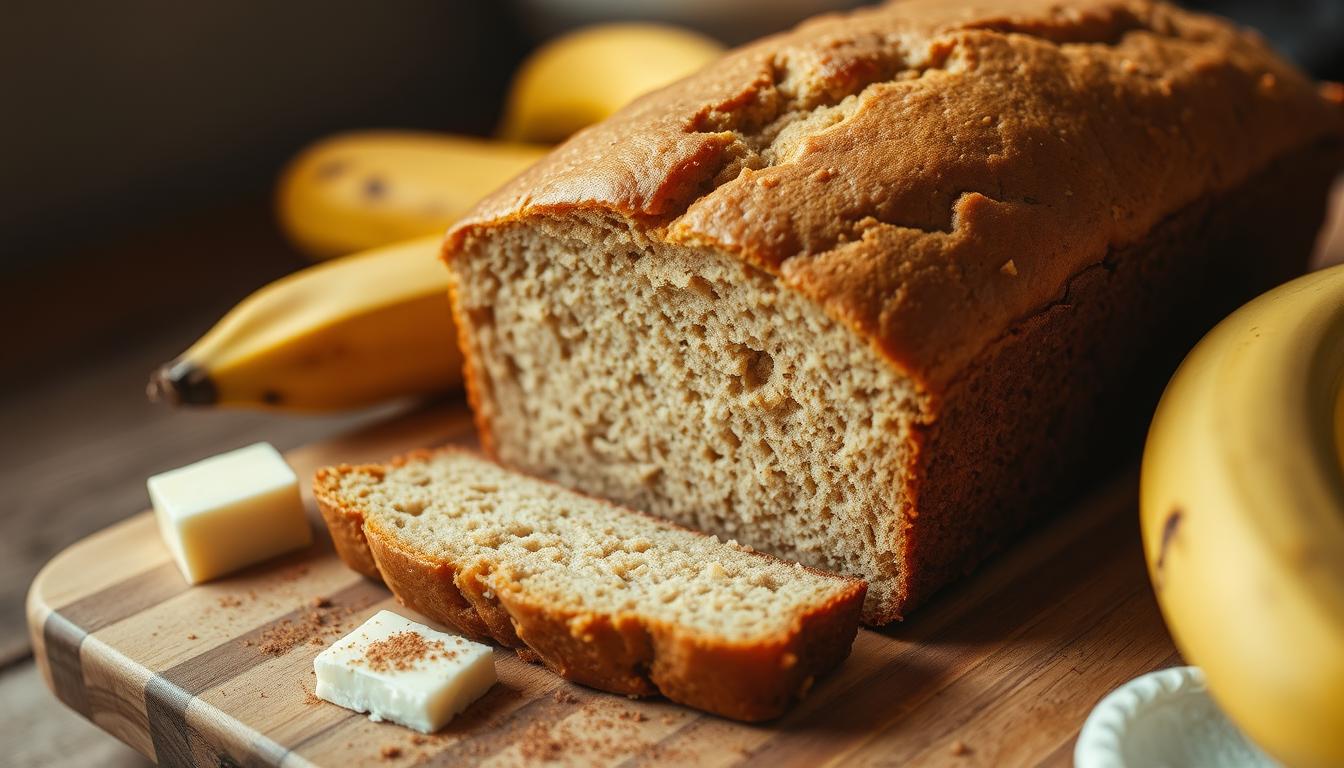
Your Guide to Baking Perfect Banana Bread
Baking the perfect homemade banana bread is a fun experience. It’s easy to do with the right help. This guide will show you how to make a moist and tasty treat, no matter if you’re new to baking or not.
Just a few simple ingredients and easy steps will get you baking a banana bread that everyone will love. This article will teach you the basics of making the perfect loaf. You’ll learn about choosing the best ingredients and how to get that perfect texture and taste.
Table of Contents
The History and Popularity of Banana Bread
Banana bread has a rich history and is loved across the United States. It’s a classic dessert found in many American bakeries. Its moist texture and sweet taste have won many hearts.
Origins of Banana Bread in American Cuisine
The Great Depression led to the creation of banana bread. Homemakers used overripe bananas to make a tasty bread. The introduction of baking powder in the late 19th century made it even more popular. It helped make the bread lighter and fluffier.
Why Banana Bread Remains a Beloved Classic
So, why do Americans love banana bread so much? It’s because it’s comforting and easy to make your own. You can add nuts, chocolate chips, or dried fruits to make it your own. Below, you’ll see some popular variations and what makes them special.
| Variation | Characteristics |
|---|---|
| Classic Banana Bread | Moist, sweet, and straightforward |
| Banana Nut Bread | Adds crunch with walnuts or pecans |
| Chocolate Chip Banana Bread | Includes chocolate chips for an extra treat |
Essential Ingredients for Perfect Banana Bread
Creating a delicious banana bread starts with the right ingredients. Each part plays a key role in making the loaf special.
Selecting the Right Bananas
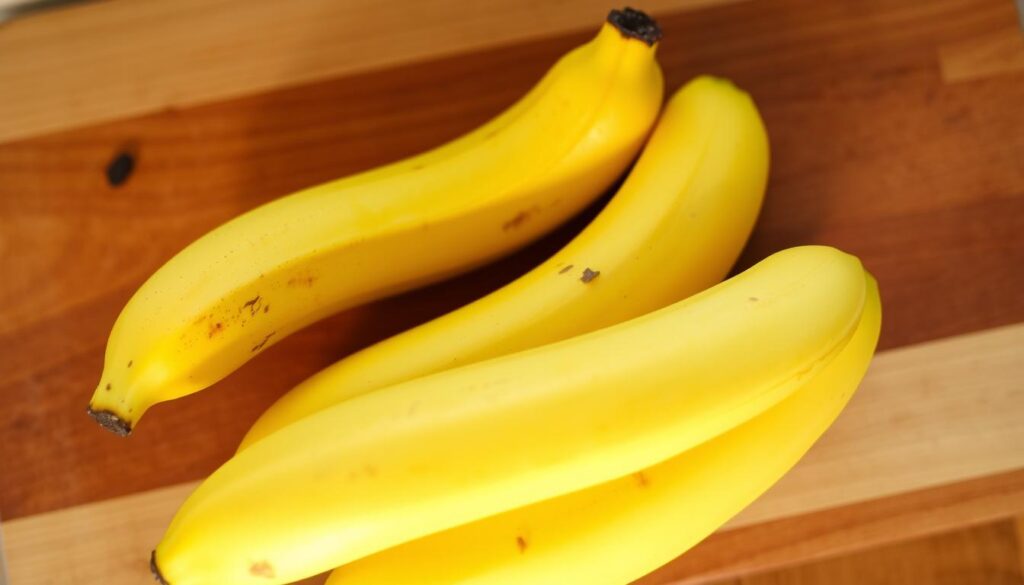
The bananas you choose greatly affect the bread’s taste and texture. Use ripe bananas with brown spots for the best flavor. These bananas are sweeter and softer, making them perfect for the batter.
Avoid green or unripe bananas. They can make the bread taste starchy and dense.
Flour Options and Their Effects
The flour you pick changes the bread’s texture and structure. All-purpose flour is a classic choice, offering a balanced texture. But, you can try whole wheat flour for a nuttier taste and denser bread.
For a gluten-free option, use gluten-free flour blends. Remember, different flours might need changes in liquid and other ingredients.
Sweeteners and Their Impact on Flavor
Sweeteners are key in enhancing banana bread’s flavor. Sugar is the usual choice, but honey or maple syrup can add depth. Liquid sweeteners can change the bread’s moisture, so you might need to adjust.
Fats: Butter, Oil, or Both?
The fat in banana bread affects its moisture and taste. Butter makes the bread rich and tender. Oil helps keep it moist. Some recipes mix both for a perfect balance.
Try different fats to find your favorite taste and texture.
Equipment and Tools You’ll Need
Before you start mixing, make sure you have the right tools for an easy banana bread recipe. The right equipment is key to making the perfect homemade banana bread.
Baking Pans and Sizes
The type and size of baking pan you use can greatly affect your banana bread.
- Loaf Pans: A standard 9×5-inch loaf pan is ideal for most recipes.
- Material: Choose between glass, ceramic, or metal pans. Dark pans can cause the bread to brown more quickly.
- Non-Stick Coating: A non-stick pan can make it easier to remove the bread after baking.
Essential Mixing Tools
To prepare your banana bread batter, you’ll need a few essential mixing tools.
- Mixing Bowls: Large bowls for combining ingredients.
- Electric Mixer: A stand or handheld mixer for creaming butter and sugar.
- Whisk and Spatula: For mixing and folding ingredients together.
Using the right mixing tools can make the process easier and ensure a smooth batter.
The Ultimate Banana Bread Recipe
Now, let’s dive into the ultimate banana bread recipe. It’s easy to make and always turns out moist and flavorful. This recipe has the perfect mix of ingredients and techniques.
Ingredient Measurements and Preparation
To begin, you’ll need to gather and measure your ingredients accurately. Here’s a breakdown of what you’ll need:
Dry Ingredients
You’ll need 2 1/4 cups of all-purpose flour, 1 teaspoon of baking soda, 1 teaspoon of salt, and 1/2 teaspoon of ground cinnamon (optional). High-quality ingredients will make your banana bread taste better and feel softer.
Wet Ingredients
Gather 3 large ripe bananas, mashed, 1/2 cup of unsalted butter (melted), 1 cup of granulated sugar, 2 large eggs, and 1 teaspoon of vanilla extract. The ripeness of your bananas is key for the best taste.
Mix-ins and Toppings
Think about adding 1/2 cup of chopped walnuts or pecans for extra texture and flavor. You can also top your banana bread with a streusel topping or a simple glaze for extra sweetness.
Step-by-Step Mixing Instructions
Start by preheating your oven to 350°F (175°C). Then, mix your dry ingredients together in one bowl and your wet ingredients in another. Combine the two mixtures gently, being careful not to overmix. If using mix-ins, fold them into the batter at this stage.
Batter Consistency Tips
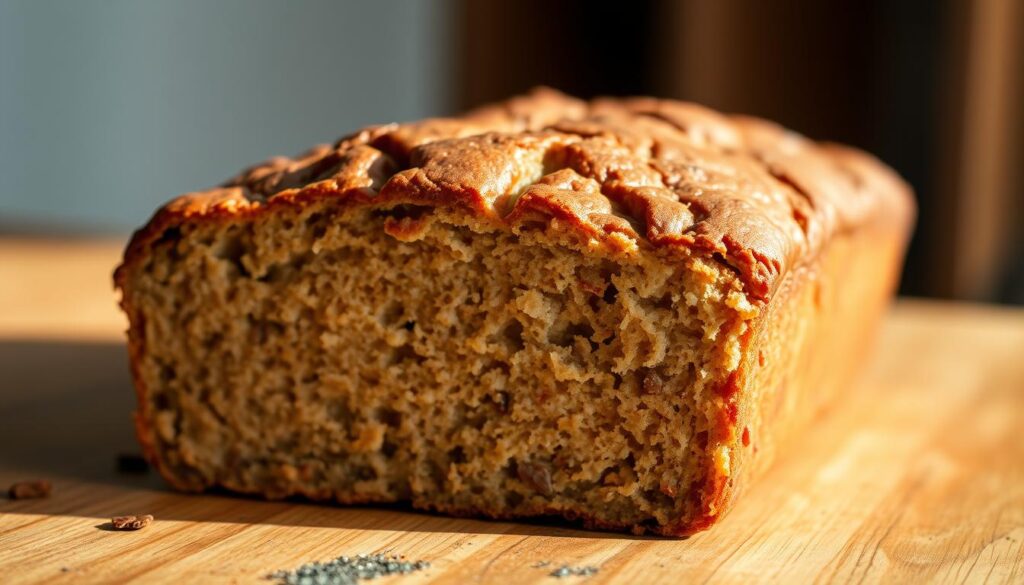
The ideal batter should be smooth and evenly moist. If your batter is too dry, add a little more melted butter or a beaten egg. If it’s too wet, a small amount of flour can help. The key is to mix just until the ingredients are combined.
By following this ultimate banana bread recipe, you’ll be on your way to baking the best banana bread that’s both easy to make and deliciously satisfying.
Preparing Your Banana Bread Batter
The batter is the heart of your banana bread. Getting it right is key. A good batter makes your banana bread moist and tasty.
Mashing Techniques for Perfect Texture
Mashing bananas is the first step. The right mashing can change your banana bread’s texture. You can mash them smooth with a fork or keep some chunks for texture.
For a moist banana bread, a few lumps are good. As Julia Child said, “The only time to eat diet food is while you’re waiting for the steak to cook.” Enjoy the richness of mashed bananas in your banana bread.
Mixing Methods: Folding vs. Beating
There are two main ways to mix ingredients: folding and beating. Beating can make the bread dense. Folding keeps it light and fluffy. It’s best to fold wet and dry ingredients separately before mixing them together.
When to Add Mix-ins
Adding mix-ins like nuts or chocolate chips is important. Fold them in gently after mixing wet and dry ingredients. This way, they’re spread out evenly without getting crushed.
Follow these tips to make a moist and delicious banana bread. It’s sure to be a hit.
The Secret to Moist Banana Bread
Finding the perfect moist banana bread is all about a few key things. Moisture is key for the bread’s texture and taste. It makes banana bread a great treat for any time.
Moisture-Adding Ingredients
To get moist banana bread, you need the right ingredients. Start with ripe bananas, as they’re sweeter and softer. Adding Greek yogurt or sour cream also helps keep it moist. Greek yogurt makes the bread tender and adds a bit of tanginess.
Using both butter and oil in the recipe adds moisture and flavor. For a gluten-free version, almond flour works well. It’s high in fat, which helps keep the bread moist.
| Ingredient | Moisture Contribution | Additional Benefits |
|---|---|---|
| Ripe Bananas | High Natural Moisture | Sweetness, Flavor |
| Greek Yogurt | Moderate Moisture | Tender Crumb, Tanginess |
| Sour Cream | High Moisture | Rich Flavor, Tender Texture |
Baking Techniques for Moisture Retention
Baking techniques are also important for keeping the bread moist. Don’t overmix the batter, as it can make the bread dense and dry. Instead, mix the wet and dry ingredients gently until just combined.
Bake the bread at the right temperature and don’t overbake it. Baking at a lower temperature for longer helps keep it moist. Covering the bread with foil if it browns too fast is also a good idea. Use a toothpick to check if it’s done without overcooking it.
Baking Your Banana Bread to Perfection
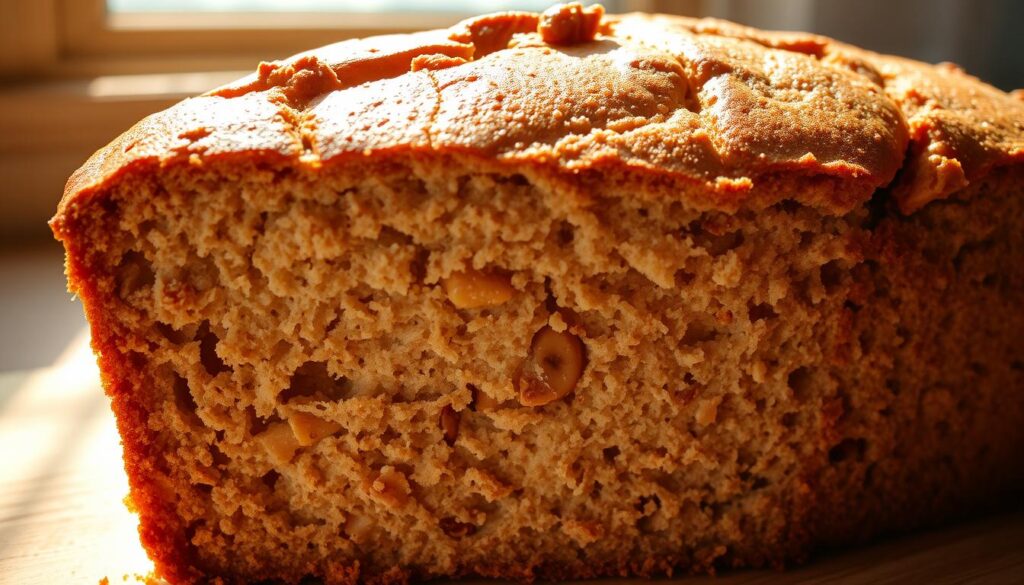
Baking banana bread is an art that needs careful attention to temperature and timing. To make a tasty homemade banana bread, watch these details closely.
Temperature and Timing Guidelines
The best temperature for baking banana bread is between 325°F and 350°F. The baking time varies based on your oven and loaf pan size. A standard 9×5-inch loaf pan usually takes 55-60 minutes at 350°F. Always check the bread to prevent overcooking.
Testing for Doneness
To check if your banana bread is done, try a few methods. Insert a toothpick into the loaf’s center; if it’s clean or has a few moist crumbs, it’s ready. You can also press the loaf’s top gently; if it springs back, it’s done. These steps are key for an easy banana bread recipe.
Cooling and Removing from Pan
After baking, take the banana bread out of the oven and let it cool in the pan for 10 minutes. Then, move it to a wire rack to cool fully. This step helps prevent the bread from getting soggy or having a bad texture.
By following these tips, you’ll bake a perfect loaf of homemade banana bread every time.
Troubleshooting Common Banana Bread Problems
Troubleshooting is key to mastering banana bread baking. Even with the best banana bread recipe, problems like sunken centers or dry texture can happen. Knowing how to fix these issues can improve your baking and make sure your bread turns out great every time.
Dealing with Sunken Centers
A sunken center in banana bread can be a letdown. This usually happens if the bread isn’t baked enough or if the oven temperature changes suddenly. To avoid this, bake at the correct temperature and check if it’s done by inserting a toothpick. If it’s clean or has a few moist crumbs, it’s ready.
Fixing Dry or Dense Bread
Dry or dense banana bread often comes from overmixing or too much flour. To fix this, mix wet and dry ingredients separately and gently combine them. Also, be careful with your measurements. Using a mix of all-purpose and whole wheat flour can help keep it moist.
Preventing Burnt Edges
Burnt edges happen if the oven is too hot or the bread is baked too long. To prevent this, check your oven’s temperature with a thermometer. If the edges start to brown too fast, cover them with foil.
Addressing Underbaked Centers
Underbaked centers usually come from not baking long enough or opening the oven door too often. To fix this, bake until a toothpick inserted into the center comes out clean. And try not to check on it too much to keep the oven temperature steady.
By using these troubleshooting tips, you can solve common banana bread problems and enjoy a perfectly baked loaf every time. Whether you’re new to baking or have lots of experience, these solutions will help you make the perfect banana bread.
Delicious Banana Bread Variations
Exploring banana bread variations is a fun journey for bakers of all levels. Banana bread’s versatility means you can always try something new. This ensures you’ll always find a flavor you love.
Classic Banana Nut Bread
Adding nuts to banana bread is a classic move. It boosts both texture and taste. Walnuts and pecans are favorites because they add a rich, nutty flavor that pairs well with bananas.
Best Nuts to Use
For banana nut bread, walnuts and pecans are the best. They bring a strong flavor and a nice crunch.
Toasting Nuts for Enhanced Flavor
Toasting nuts before mixing them into the batter makes them taste better. Just spread the nuts on a baking sheet and bake at 350°F for 5-7 minutes. They should smell fragrant and look lightly browned.
Chocolate Chip Banana Bread
Chocolate chips in banana bread are a treat for those who love sweets. The chocolate melts, creating gooey pockets in the loaf.
- Dark chocolate chips add a deep, rich flavor.
- Semi-sweet chocolate chips offer a classic chocolate taste.
Gluten-Free Banana Bread Options
Gluten-free banana bread is great for those who can’t eat gluten. Almond flour and coconut flour are good substitutes in banana bread recipes.
When using gluten-free flours, you might need to adjust the liquid. Adding xanthan gum can also help with texture.
Vegan Banana Bread Adaptations
Vegan banana bread is just as tasty as the traditional version. Use flaxseed or chia seeds instead of eggs and plant-based milk for a vegan loaf.
Replace butter with coconut oil or vegan butter to keep the bread moist and flavorful.
Storing and Serving Your Banana Bread
The final steps for your homemade banana bread are storing and serving it right. To fully enjoy your easy banana bread recipe, keeping it fresh is essential.
Keeping Banana Bread Fresh
Keeping your banana bread fresh is crucial for enjoying it over time. Here are some storage tips to remember:
Room Temperature Storage
Store your banana bread in an airtight container at room temperature for up to 3 days. This method is great for keeping the texture and flavor.
Refrigeration Methods
For longer storage, refrigerate your banana bread. Wrap it tightly in plastic wrap or aluminum foil and store it in the refrigerator for up to a week.
Freezing for Long-Term Storage
To store your banana bread for a long time, freeze it. Wrap the bread tightly and put it in a freezer-safe bag. Frozen banana bread can last up to 3 months.
Serving Suggestions and Pairings
Serving your homemade banana bread can be as creative as making it. Try it with a warm cup of coffee or tea, or top it with your favorite spreads like peanut butter or Nutella. You can also use it as a base for French toast or bread pudding.
| Storage Method | Duration | Tips |
|---|---|---|
| Room Temperature | Up to 3 days | Use an airtight container |
| Refrigeration | Up to 1 week | Wrap tightly in plastic wrap or foil |
| Freezing | Up to 3 months | Use a freezer-safe bag |
Conclusion: Enjoying Your Homemade Banana Bread
Now that you’ve baked your perfect banana bread, it’s time to enjoy it. A warm, moist banana bread is a treat like no other. You can savor it on its own or with your favorite spreads or toppings.
To keep your banana bread fresh, store it in an airtight container. You can also freeze it for later. Get creative by using it as a base for French toast or bread pudding.
The joy of baking is not just in the process. It’s also in sharing your creations with others. So, go ahead and share your delicious homemade banana bread. Enjoy the praise and appreciation from family and friends. With your newfound baking skills, you’ll make moist banana bread often in your kitchen.