Mango Sticky Rice: The Ultimate Thai Dessert Recipe
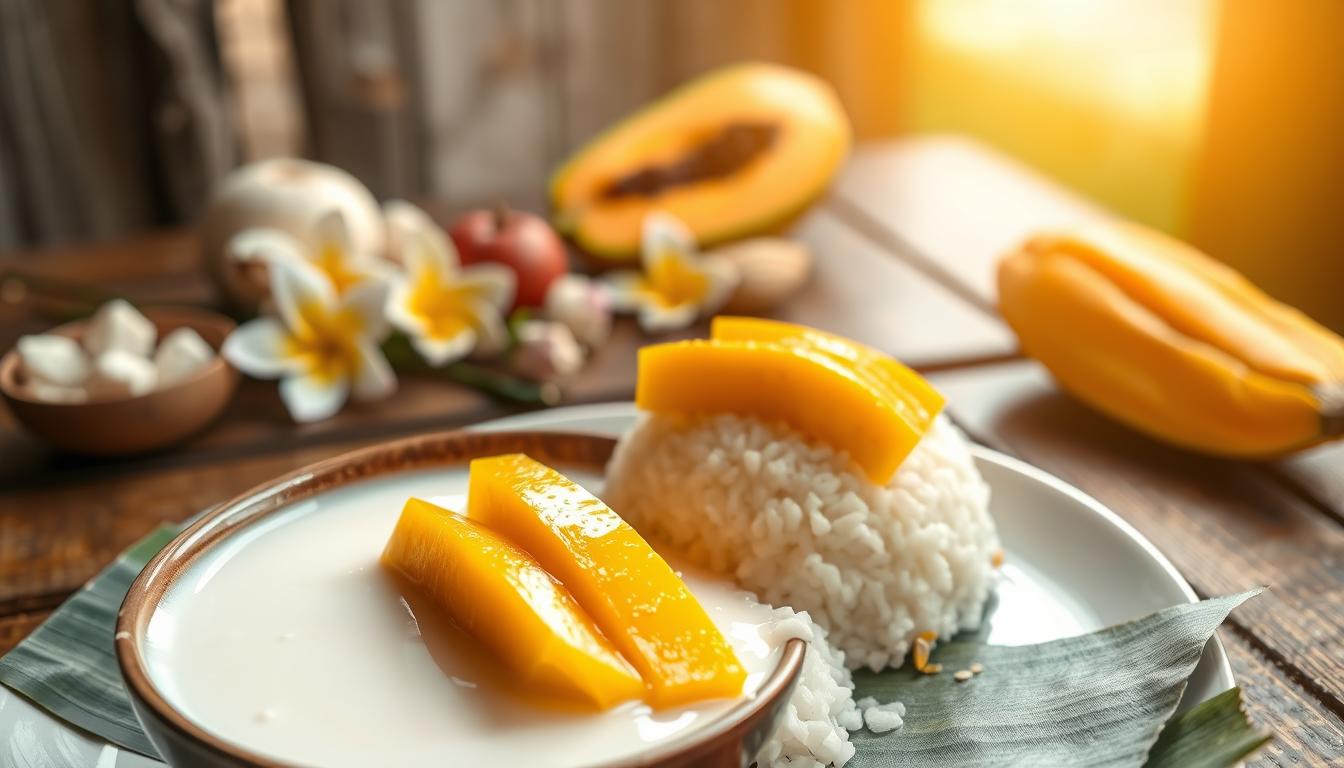
Ever wondered why fruit and grain taste like a tropical getaway? This traditional mango sticky rice recipe is seriously delicious and easy to make. It has a sweet, salty, and chewy texture that’s irresistible.
You don’t need a plane ticket to enjoy this Thai treat. This guide shows you how to pair fresh fruit with coconut cream sauce. Every bite brings the lively spirit of Bangkok’s street markets to your table.
Making this dish is quick and rewarding. You’ll learn to steam the grains and season them with aromatic ingredients. Homemade mango sticky rice often tastes better than store-bought versions.
This post introduces the popular treat and what you’ll learn. We cover choosing the best fruit and perfecting the presentation. Get ready to wow your friends with this refreshing and sweet dish.
Table of Contents
Discovering the Magic of Thai Mango Sticky Rice
In Thailand, Mango Sticky Rice is more than a dessert; it’s a cultural icon. It represents the country’s rich culinary heritage. This beloved treat, known locally as “khao niao mamuang,” has been a staple for generations.
The allure of Thai Mango Sticky Rice comes from its creamy coconut sauce, sweet mangoes, and chewy rice. It’s “Creamy, chewy, salty-sweet and irresistibly photogenic,” making it a favorite. Its popularity has spread worldwide, with people everywhere trying to make this iconic Thai dessert.
Making Mango Sticky Rice is more than following a recipe. It’s about understanding the cultural context and traditional techniques. The right ingredients, like glutinous rice and ripe mangoes, and the coconut sauce are key to its taste and texture.
Exploring Thai Mango Sticky Rice reveals its magic in flavors and memories. Enjoyed at a street food stall in Bangkok or made at home, it brings people together. It’s a special part of Thai culinary culture.
What Makes Authentic Mango Sticky Rice So Special
Authentic Mango Sticky Rice is more than a dessert; it’s a cultural icon in Thai cuisine. This dish has been a staple in Thai culture for centuries. It traces back to the late reign of King Rama II during the early Rattanakosin period.
The tradition of making khao niao mun — sticky rice gently cooked with rich coconut milk — has been passed down through generations. It has evolved into the beloved Mango Sticky Rice dessert known today.
The Cultural Significance in Thai Cuisine
In Thailand, Mango Sticky Rice is more than a dessert; it’s a symbol of warmth, hospitality, and community. It’s often served during special occasions and festivals, bringing people together. The dish is deeply rooted in Thai culture, reflecting the country’s rich culinary heritage.
The Perfect Balance of Flavors and Textures
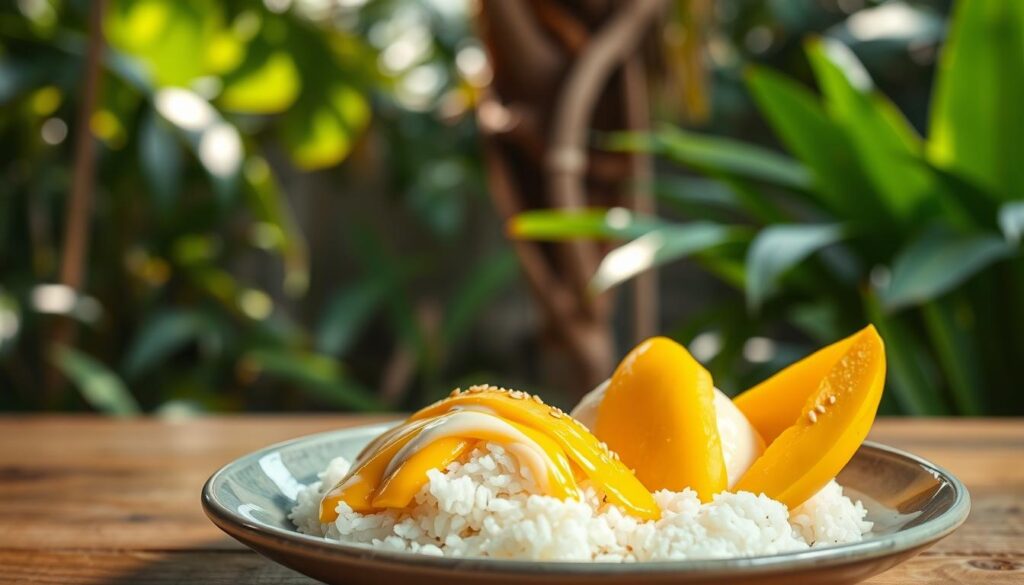
The magic of Mango Sticky Rice lies in its perfect balance of flavors and textures. The dish combines the creamy richness of coconut milk, the sweetness of ripe mangoes, and the subtle saltiness of the sauce. All these are balanced with the soft, glutinous rice.
This balance creates a truly unforgettable culinary experience.
Why This Dessert Has Global Appeal
The global appeal of Mango Sticky Rice dessert can be attributed to its unique flavor profile and the exotic experience it offers. As people become more adventurous in their culinary pursuits, dishes like Mango Sticky Rice have gained popularity worldwide. They introduce the richness of Thai cuisine to a broader audience.
Essential Ingredients for Your Mango Sticky Rice Recipe
To make authentic Mango Sticky Rice, focus on the quality of your ingredients. The right mix will take your dessert from good to great. It will capture the true essence of this beloved Thai treat.
Selecting the Right Glutinous Rice
The base of Mango Sticky Rice is the glutinous or “sticky” rice. This rice has more starch, making it sticky when cooked. For the best taste, choose high-quality glutinous rice labeled for desserts.
Choosing Ripe Mangoes for Maximum Flavor
The mango is the star of this dessert. So, picking the right variety and ripeness is key. Choose sweet, ripe mangoes like Nam Dok Mai or Chaunsang. A ripe mango will be soft to the touch and smell sweet.
Understanding Coconut Milk Quality
Coconut milk is vital for flavor and texture. Use fresh coconut milk that’s rich and thick. If using canned, choose a high-quality, full-fat version without additives.
Sugar, Salt, and Other Key Components
Other key ingredients include granulated sugar, salt, and sometimes pandan leaves. The right balance of sugar and salt is important. It should enhance the mango’s sweetness without overpowering it. A pinch of salt can also balance the flavors.
| Ingredient | Description | Importance Level |
|---|---|---|
| Glutinous Rice | High-starch rice that becomes sticky when cooked | High |
| Ripe Mangoes | Sweet, ripe mangoes such as Nam Dok Mai or Chaunsang | High |
| Coconut Milk | Rich, thick, and high in fat for the best flavor | High |
| Granulated Sugar | Adds sweetness to balance the dish | Medium |
| Salt | Used in small amounts to enhance flavors | Medium |
Kitchen Tools and Equipment You’ll Need
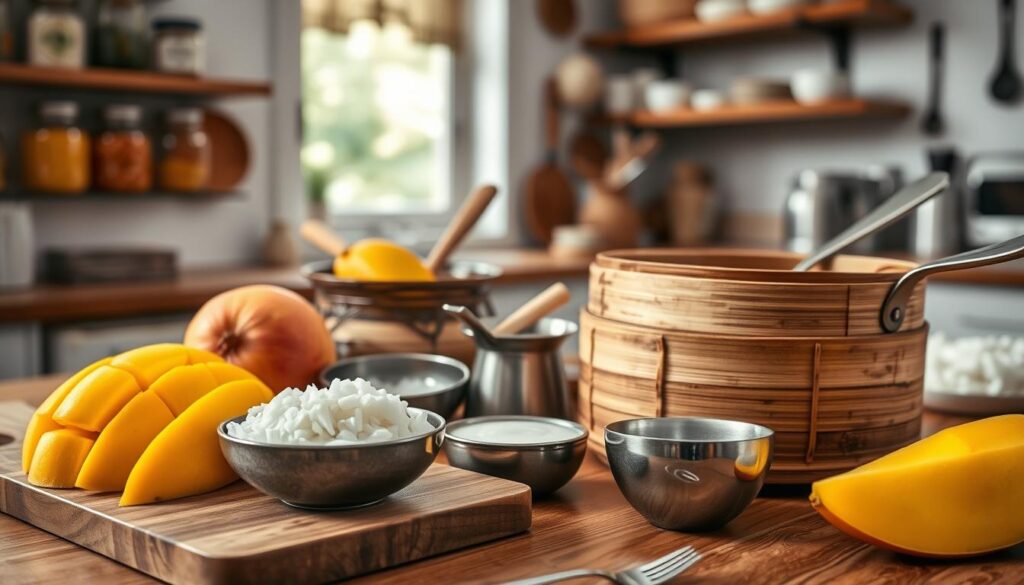
To make delicious homemade mango sticky rice, you need the right kitchen tools. You’ll need specific equipment to get the perfect texture and flavor.
Traditional Steaming Equipment
Thais traditionally use a bamboo steamer basket over boiling water to steam the rice. This method steams the rice evenly and keeps it sticky. As one Thai chef said,
“Steaming is an art that requires patience and the right tools.”
Alternative Methods for Modern Kitchens
If you don’t have a bamboo steamer, you can use other methods. A metal steamer or a rice cooker with a steaming function works well too.
| Steaming Method | Equipment Needed | Result |
|---|---|---|
| Bamboo Steamer | Bamboo basket, metal pot | Traditional texture, aromatic |
| Metal Steamer | Metal steamer basket, pot | Even steaming, easy to clean |
| Rice Cooker | Rice cooker with steaming function | Convenient, consistent results |
Measuring and Mixing Tools
Getting the right measurements is key when making mango sticky rice. You’ll need measuring cups and spoons for the ingredients. A mixing bowl is also important for mixing the coconut milk, sugar, and salt.
How to Make Mango Sticky Rice: Step-by-Step Instructions
Now, let’s dive into making Mango Sticky Rice. This traditional Thai dessert is easy to make with the right steps. You’ll get a delicious treat that’s just like the ones in Thai restaurants.
Step 1: Soaking the Sticky Rice Properly
Start by soaking the glutinous rice. Rinse it well, then soak it in water. Add alum and rinse again. Do this three times until the water is clear. This step removes excess starch and helps the rice cook evenly.
Step 2: Steaming Your Rice to Perfection
After soaking, steam the rice. Use a steamer or a steamer basket in a pot. Spread the rice out to cook evenly. Steam for 15-20 minutes until it’s fluffy.
Step 3: Preparing the Sweet Coconut Sauce
While the rice steams, make the coconut sauce. Mix coconut milk, sugar, and salt in a saucepan. Heat it, stirring until the sugar dissolves. Simmer until it thickens a bit.
“The key to a great coconut sauce is in the balance of flavors,” a chef says. The sauce should be thick enough to coat the rice but still pourable.
Step 4: Mixing Rice with Coconut Mixture
Once the rice is done, mix it with the coconut sauce. Pour the sauce over the rice and fold until coated. This step infuses the rice with the coconut sauce’s flavors.
Step 5: Creating the Coconut Cream Topping
For the topping, use chilled full-fat coconut milk. Scoop out the thick cream and mix with sugar and salt. Set it aside for the topping.
Step 6: Slicing and Preparing Your Mangoes
Choose ripe but firm mangoes. Slice them into thin wedges or chunks. The mangoes should be sweet and slightly tangy.
Step 7: Plating and Final Assembly
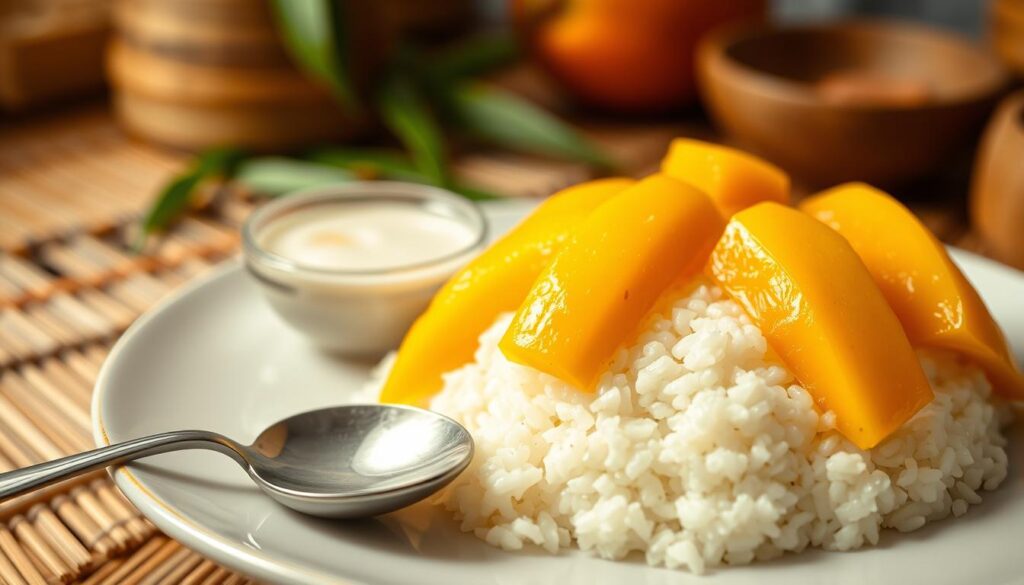
To assemble, place sticky rice on a plate or in a bowl. Arrange mango slices alongside or on top. Drizzle with coconut sauce and sprinkle with sesame seeds or toasted coconut flakes. Top with coconut cream.
By following these steps, you’ll make authentic Mango Sticky Rice. Enjoy the delicious flavors and textures of this beloved dessert.
Expert Tips for Perfect Homemade Mango Sticky Rice
Making the best Mango Sticky Rice needs focus and some insider tips. To make this Thai dessert at home, you must master a few key steps. Here are some expert tips to help you perfect your homemade Mango Sticky Rice.
Achieving the Ideal Rice Consistency
The base of great Mango Sticky Rice is the rice. Getting the cooking method right is key, even more so for big batches. Make sure to steam the rice longer to get it just right.
To get the perfect texture, do the following:
- Soak the glutinous rice for at least 4 hours or overnight
- Steam the rice over boiling water for 15-20 minutes
- Check the rice often to avoid overcooking
Balancing Sweetness in Your Coconut Sauce
The coconut sauce is crucial for Mango Sticky Rice. Too much sugar can make it too sweet, while too little can make it taste bland.
| Ingredient | Quantity | Purpose |
|---|---|---|
| Coconut milk | 1 cup | Provides creaminess and richness |
| Sugar | 1/2 cup | Adds sweetness |
| Salt | 1/4 teaspoon | Balances flavors |
Temperature Control for Best Results
Temperature is key in making Mango Sticky Rice. Controlling the heat during cooking is crucial for the best results.
For the best results, follow these steps:
- Use medium heat when cooking the coconut sauce
- Avoid boiling the sauce, as it can curdle the coconut milk
- Keep the steamed rice warm until serving
Timing Your Preparation for Optimal Texture
Timing is everything in making Mango Sticky Rice. Coordinate your preparation to ensure all parts are ready at once.
To get the best texture, do the following:
- Make the coconut sauce just before serving
- Steam the rice shortly before assembling the dessert
- Slice the mangoes just before serving to keep them fresh
Common Mistakes to Avoid When Making This Dessert
To make your mango sticky rice perfect, avoid common mistakes. This Thai dessert can be tricky, but knowing the pitfalls helps. It ensures the right texture and flavor.
Rice Preparation Errors That Ruin Texture
The glutinous rice is key in mango sticky rice. Mistakes in preparing it can ruin the dish’s texture. Over-soaking or under-soaking the rice can cause problems. If soaked too little, the rice might be hard. Too much soaking makes it mushy.
Soak the glutinous rice for about 4 hours or overnight. This is the best time. Also, steaming the rice correctly is crucial. It should be fluffy but not too soft.
| Rice Preparation Method | Potential Error | Resulting Texture |
|---|---|---|
| Under-soaking | Not soaking long enough | Hard or crunchy |
| Over-soaking | Soaking too long | Mushy or too soft |
| Improper Steaming | Insufficient steaming time or incorrect technique | Undercooked or uneven texture |
Coconut Sauce Problems and Solutions
The coconut sauce is vital in mango sticky rice. A common issue is incorrect sugar and salt balance. Too little sugar can make the rice mushy. The right amount of salt balances the sweetness.
Another problem is the coconut sauce being too thick or too thin. It should be creamy but pourable. Adjust the coconut milk or cooking time to get the right consistency. Thin out a thick sauce with water or more coconut milk.
Mango Selection and Ripeness Issues
Choosing the right mangoes is crucial. Using unripe or overripe mangoes can ruin the flavor. Unripe mangoes are too firm, while overripe ones are too soft and sweet.
Look for mangoes that are slightly soft but still firm. They should be vibrant in color and have a sweet aroma.
By avoiding these mistakes, you can make a delicious mango sticky rice. It will impress your family and friends.
Creative Variations of Traditional Mango Sticky Rice
You can make the traditional Mango Sticky Rice your own by adding different fruits and flavors. People have tried many fruits, but mango is still the best. But, feel free to experiment.
Mango Sticky Rice is very versatile. You can change it to fit your taste or use seasonal fruits. Here are some ideas to start:
Using Different Tropical Fruits
While mango is classic, other fruits can bring new tastes and textures. Try:
- Pineapple: Adds a tangy sweetness
- Durian: For a creamy, rich flavor
- Jackfruit: Provides a unique texture and sweetness
- Rambutan: Offers a sweet and slightly sour taste
Adding Pandan and Other Flavor Enhancers
To enhance your Mango Sticky Rice, add these enhancers:
- Pandan Leaves: Infuse the rice with pandan extract or use pandan leaves during steaming for a unique aroma
- Coconut Flakes: Toasted coconut flakes can add a nice crunch and flavor
- Sesame Seeds: Adds a nutty flavor and crunchy texture
Topping Ideas and Garnish Options
Make your Mango Sticky Rice look great with creative toppings and garnishes:
- Mango Slices: Arrange fresh mango slices artfully on top
- Coconut Cream: Drizzle with extra coconut cream for added richness
- Sesame Seeds or Crushed Peanuts: Sprinkle for added texture
- Fresh Mint Leaves: Use as a garnish for a refreshing contrast
Serving, Storage, and Make-Ahead Tips
The final touches matter: serving, storing, and making ahead are key for a perfect mango sticky rice dessert experience. Proper handling keeps your authentic mango sticky rice fresh and delicious.
Best Ways to Serve Your Mango Sticky Rice
To serve, place the coconut sticky rice on a plate. Add slices of ripe mango, drizzle with coconut sauce, and sprinkle with crispy mung beans. You can also add sesame seeds or fresh mint leaves for extra flavor and looks.
How to Store Leftover Components
Store leftover sticky rice, coconut sauce, and mango slices separately. This keeps them fresh. Keep the sticky rice in an airtight container in the fridge for up to 3 days. The coconut sauce can be refrigerated for up to 5 days. Mango slices are best eaten right away but can be stored in the fridge for a day.
| Component | Storage Method | Storage Duration |
|---|---|---|
| Sticky Rice | Airtight container in refrigerator | Up to 3 days |
| Coconut Sauce | Refrigerated | Up to 5 days |
| Mango Slices | Refrigerated | Up to 1 day |
Reheating and Refreshing Your Dessert
To reheat sticky rice, steam it for a few minutes until warm. You can also microwave it in short intervals until heated through. Refresh the coconut sauce by gently heating it. If it’s too thick, thin it with coconut milk or water.
Make-Ahead Strategies for Entertaining
You can prepare the sticky rice and coconut sauce ahead of time. Soak and steam the rice a day in advance and store it in the fridge. Make the coconut sauce up to 5 days in advance. Slice the mangoes just before serving to keep them fresh and ripe.
Conclusion
You now know how to make a real mango sticky rice recipe. This dessert truly captures the spirit of Thai cuisine. You’ve learned to pick the best ingredients, cook the glutinous rice just right, and mix the coconut sauce perfectly.
As you make this dessert, you’ll find joy in mixing simple ingredients. It’s not just a sweet treat; it’s a way to share moments and memories. It reminds us of sunny places and friendly gatherings.
Now that you know how to make it, try adding your own twist. Whether it’s for a party or just for you, mango sticky rice will always be a hit. So, get your ingredients ready, follow the steps, and dive into the world of Thai sweets.