Easy Seafood Boil Recipe for a Perfect Family Dinner
There’s something magical about gathering your favorite people around a table. The sound of laughter fills the room as everyone reaches for a shared feast. These moments create memories that last far longer than the meal itself.
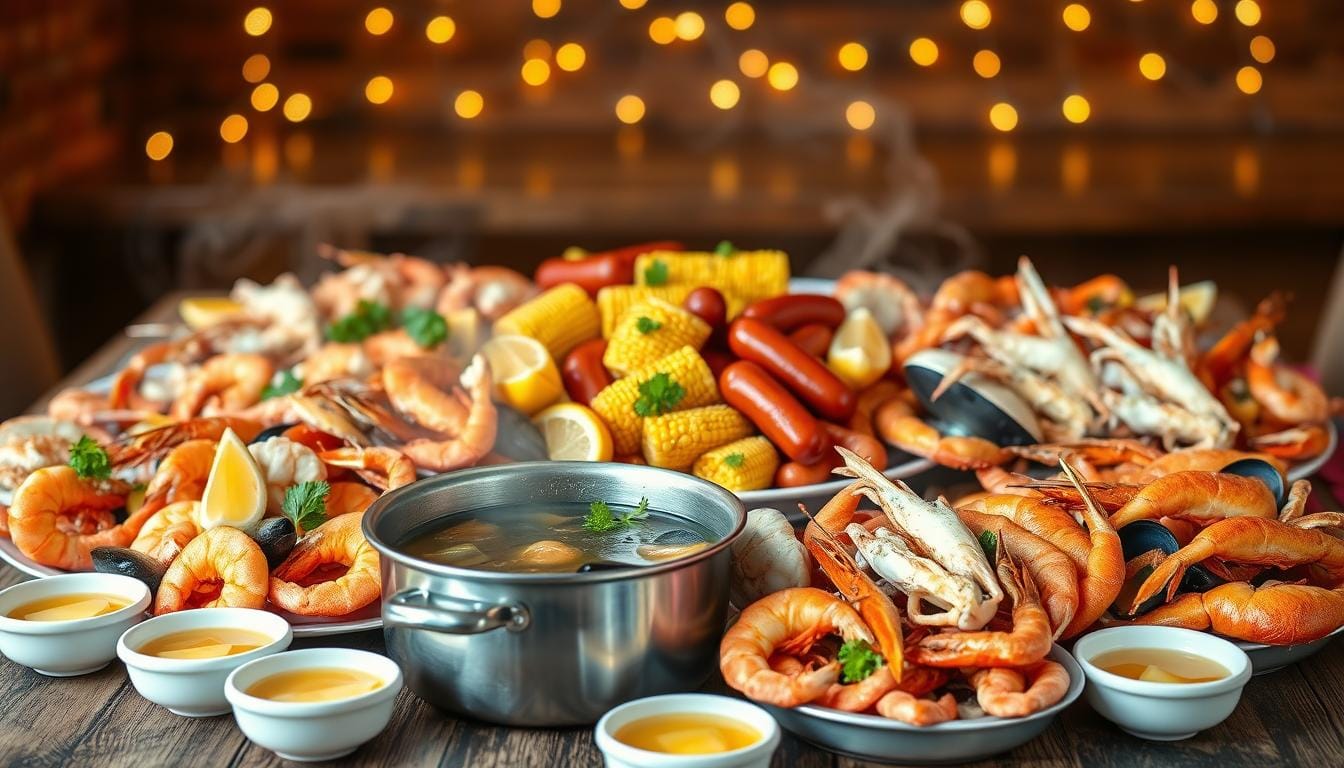
A classic communal dinner brings friends and family together. They enjoy a bounty of fresh ocean treasures, crisp vegetables, and bold spices. It’s the ultimate way to celebrate the simple joy of being together.
You can master this restaurant-quality experience in your own kitchen. By following this easy seafood boil recipe, you’ll learn to balance rich, buttery notes with the perfect amount of heat. This guide helps you create the best seafood boil recipe for your next weekend gathering.
Whether you’re hosting a summer celebration or a cozy Sunday night, this flavorful dish is perfect. Get ready to impress your guests with a seafood boil recipe that feels both indulgent and effortless.
Table of Contents
The Appeal of a Traditional Southern Seafood Boil
A traditional seafood boil is more than just a meal. It’s a way to bring people together. By ditching fancy plates and utensils, you make room for laughter and stories.
Why Seafood Boils Bring Families Together
The charm of a southern seafood boil is its simplicity. Covering the table in paper invites everyone to get hands-on. This makes the meal a shared, joyful experience.
It’s not just about the food. It’s about working together to enjoy it. Peeling shrimp or cracking crab legs keeps everyone involved. It’s a great way to enjoy summer and make memories with family.
Understanding the Cultural Roots of the Boil
The boil tradition comes from the U.S. coast, like the Tidewater and Lowcountry. These areas needed a way to feed many with what they caught. This led to a communal cooking method that became a cultural treasure.
Each region puts its own twist on the boil, using local flavors and spices. Here’s how different areas make the boil their own:
| Region | Primary Protein | Key Seasoning | Serving Style |
|---|---|---|---|
| Lowcountry | Shrimp | Old Bay/Mustard | Communal Table |
| Gulf Coast | Crawfish | Cayenne/Garlic | Outdoor Tray |
| Chesapeake | Blue Crab | Heavy Paprika | Paper-lined Table |
Essential Ingredients for Your Homemade Seafood Boil
The secret to a great southern seafood boil is in the ingredients. Fresh, vibrant parts make every bite full of coastal flavor. Making a homemade seafood boil is like art, mixing textures and tastes.
Selecting the Freshest Shellfish
Your protein choice is key for the meal. Snow crab legs should have a bright orange shell and smell clean. Freshness is crucial for the best seafood boil recipe.
Choose jumbo shrimp that feel firm. Good shellfish stays juicy even in boiling broth.
Choosing the Right Vegetables and Aromatics
Vegetables add sweetness to balance the spices. Fresh corn on the cob soaks up the broth well. Yellow onions and garlic cloves make the broth rich and complex.
These ingredients soak up the seasonings. Firm potatoes and crisp corn add texture to your homemade seafood boil.
The Role of Sausage in Flavor Depth
Adding smoked sausage adds a rich flavor. The sausage’s fat makes the broth smoky, a key part of a southern seafood boil. Choose spicy andouille or smoked kielbasa for a great contrast.
| Ingredient Category | Primary Selection | Flavor Contribution |
|---|---|---|
| Shellfish | Snow Crab & Jumbo Shrimp | Sweet and Briny |
| Vegetables | Corn & Red Potatoes | Texture and Sweetness |
| Aromatics | Garlic & Onion | Savory Base |
| Protein | Smoked Sausage | Smoky Depth |
Mastering the Seafood Boil Recipe
Learning to make a seafood boil starts with the right kitchen tools. The right equipment makes the process smoother and more fun. Whether you’re new to cooking or experienced, knowing the technical side ensures great results every time.
Equipment You Need for a Large Batch
To make a big easy seafood boil recipe, you need a big pot. A 24-quart stockpot with a removable basket is best. It lets you lift all ingredients out of the boiling water without overcooking.
You’ll also need a long spoon or paddle for stirring. Heavy-duty tongs are great for handling corn or sausage. Having these tools ready makes cooking a seafood boil easier and less stressful.
| Equipment | Purpose | Importance |
|---|---|---|
| 24 qt Stockpot | Cooking volume | High |
| Boil Basket | Easy straining | High |
| Long Paddle | Mixing ingredients | Medium |
| Heat-resistant Gloves | Safety | High |
Safety Precautions When Working with Boiling Water
Working with boiling water needs constant attention. Make sure your pot is on a stable surface to avoid spills. When adding ingredients, do it slowly to avoid splashes.
“Preparation is the secret ingredient that turns a simple meal into a memorable feast.”
Steam can burn you badly, so open the lid away from your face. Wearing heat-resistant gloves adds extra protection. Always keep children and pets away from the cooking area when making a seafood boil recipe.
Scaling the Recipe for Different Group Sizes
Knowing how to adjust a seafood boil for different groups is key. For a small family, a smaller pot works, but adjust the liquid and ingredients. For big groups, don’t fill the pot too much to avoid spills.
When making more, keep the seasoning the same. Double the ingredients, but also double the spices. Always leave room for the water to boil again after adding cold ingredients.
Preparing Your Ingredients for Success
Learning how to make a seafood boil begins long before you start cooking. Getting your ingredients ready right is key to a tasty and easy homemade seafood boil. Organize your space and clean your shellfish well to set up for a great meal.
Cleaning and Deveining Shrimp Properly
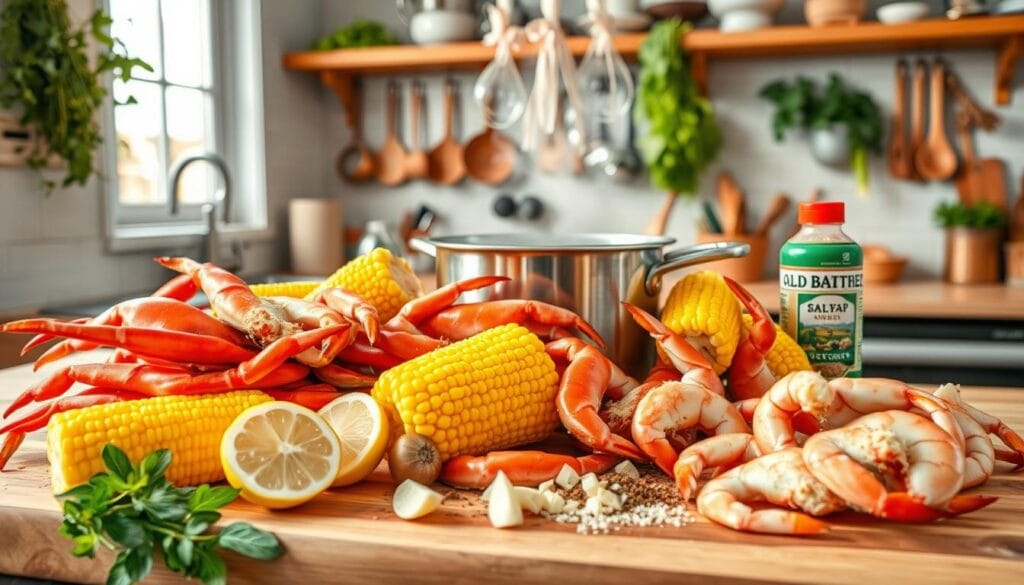
Rinse your shrimp under cold water first. To devein, make a small cut along the shrimp’s back. Then, use a knife or toothpick to remove the dark vein.
It’s best to leave the shells on for a homemade seafood boil. They protect the meat and add flavor. For lobster tails, split them lengthwise with sharp shears. This lets the meat soak up all the spices.
Scrubbing Clams and Mussels
Clams and mussels need extra cleaning to remove sand. Use a stiff brush to scrub them under cold water. Throw away any shells that are cracked or don’t close when tapped.
“The secret to a great boil is respecting the ingredients; clean them well, and they will reward you with incredible flavor.”
Cutting Vegetables for Even Cooking
Make sure to cut potatoes, corn, and onions the same size. This way, they cook evenly. This simple trick helps avoid mushy veggies and keeps your meal consistent.
| Ingredient | Prep Method | Cooking Priority |
|---|---|---|
| Potatoes | Halved or quartered | High |
| Corn | Cut into 2-inch rounds | Medium |
| Lobster Tails | Split lengthwise | Low |
| Shrimp | Deveined, shell-on | Low |
Mastering how to make a seafood boil boosts your kitchen confidence. Being prepared lets you enjoy the cooking and time with your family.
Crafting the Perfect Seafood Boil Seasoning Blend
With the right seasoning blend, simple ingredients can become a culinary masterpiece. A great feast starts with a balanced seafood boil seasoning that fills every shell and vegetable. This ensures every bite is full of flavor.
Balancing Heat and Spice
Making a spicy seafood boil needs a careful touch. You want the heat to bring out the shellfish’s natural sweetness, not hide it. Start with cayenne, paprika, and mustard seed for a rich flavor base. Adjusting the heat level is simple by adding peppers slowly, letting the flavors mix well.
Using Commercial Blends Versus Homemade Mixes
Choosing between store-bought or homemade seasoning depends on your time and taste. A good cajun seafood boil recipe often uses pre-mixed spices for ease and consistency. But making your own mix lets you control the salt and tailor the flavor to your family’s liking.
Adding Citrus and Herbs for Brightness
To make your dish stand out, add fresh elements to balance the spices. Grate your garlic cloves finely or blend them into a paste for full flavor. Adding fresh lemon wedges and herbs like thyme or parsley in the last minutes gives a bright, zesty finish that complements the spices well.
Cooking Times and Temperature Management
To get the perfect texture in your seafood feast, pay close attention to cooking times. A cajun seafood boil recipe works best when you follow a specific order. This order helps ensure that all ingredients are cooked just right.
The Importance of Staggered Cooking
Staggering your ingredients is key to a great seafood boil. Start by boiling denser items like potatoes, corn, and sausage. They need more heat to soften.
Once these are almost tender, add the more delicate parts. This way, everything cooks evenly.
Here’s a simple order to keep quality high:
- Potatoes and onions: Start with these as they take the longest to cook.
- Corn and sausage: Add these in the middle to keep them juicy.
- Shrimp and shellfish: Add these last for quick cooking.
How to Tell When Seafood is Perfectly Cooked
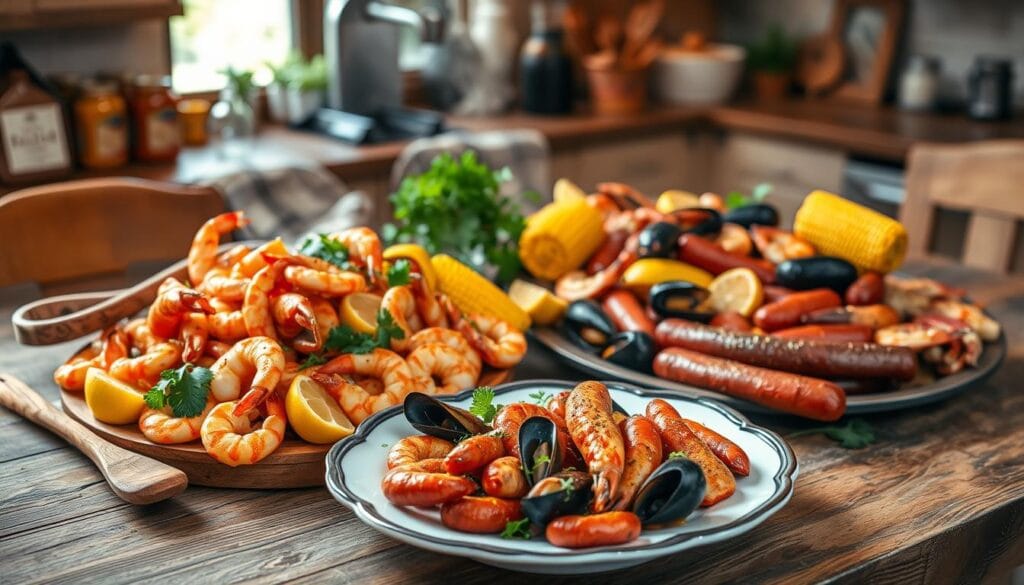
Look for visual and tactile signs to check if seafood is done. Shrimp are ready when they turn pink and curl into a “C” shape. If they curl into a tight “O,” they’re overcooked.
For clams and mussels, watch for shells opening wide. If a shell doesn’t open, it’s best to throw it away. Proper timing keeps the meat tender and sweet.
Managing the Boil Intensity
Keeping the right heat is crucial for even cooking. Use a steady boil for veggies to soften evenly. But, when adding seafood, reduce the heat to a gentle simmer.
This gentle heat lets the seafood boil seasoning flavor the meat without overcooking it. Finding this balance is what makes a cajun seafood boil recipe successful.
Serving Suggestions for a Memorable Family Feast
Creating a memorable experience starts when guests sit down to eat. The cooking process is key, but how you present your traditional seafood boil sets the mood. Make sure everyone feels comfortable and ready to enjoy.
Setting the Table for a Casual Experience
Serve this meal in a rustic, communal style. Cover your table with newspaper or butcher paper for a festive look. This makes cleanup easy and invites guests to eat with their hands.
“The best meals are those shared with laughter, messy hands, and good company.”
Put large bowls or platters in the center of the table. This way, everyone can easily get to the food. Have plenty of napkins and a bin for shells to keep things tidy.
Best Dipping Sauces to Complement the Boil
A spicy seafood boil is full of flavor, but the right sauces can make it even better. Offer different dips so guests can choose their favorite.
- Garlic Butter: A classic choice that balances the spices.
- Remoulade: A tangy, creamy sauce that adds depth.
- Cocktail Sauce: Sharp and acidic, it contrasts the savory shellfish.
- Lemon Aioli: Bright and citrusy, it finishes every bite.
Pairing Drinks with Spicy Seafood
Choosing the right drink is crucial for bold, seasoned dishes. You want something that refreshes without clashing with the spices. Cold, crisp options are usually the best.
Light lagers or pilsners are great because their carbonation cleanses your tongue. For non-alcoholic drinks, try iced tea with lemon or sparkling water with lime. These pairings keep the meal enjoyable from start to finish.
Tips for Storing and Reheating Leftovers
Keeping your homemade seafood boil fresh is key. You can enjoy it again if you store and reheat it right.
Safe Storage Practices for Seafood
Act fast after your meal is over. Put leftover seafood, veggies, and sausage in an airtight container or a heavy-duty zip-top bag.
Refrigerate these items within two hours to stop bacteria growth. They stay safe and tasty for up to two days in the fridge.
How to Reheat Without Overcooking
Reheating seafood can be tricky to avoid a tough texture. The microwave is not the best choice as it cooks unevenly.
Try steaming your leftovers on the stovetop. Put them in a steamer basket over boiling water for a few minutes until hot.
Or, put them in a baking dish with some broth or butter. Cover it with foil and warm it in a low oven until hot.
Creative Ways to Use Leftover Boil Ingredients
Don’t want to eat it the same way? You can turn leftovers into new dishes. The flavors are great for quick meals.
- Seafood Gumbo: Chop the leftover sausage and seafood to add depth to a hearty gumbo base.
- Breakfast Hash: Dice the potatoes and sausage, then sauté them with onions and peppers for a savory morning hash.
- Seafood Pasta: Toss the shrimp and crawfish with linguine, garlic, and a light lemon-butter sauce for a quick lunch.
Be creative with leftovers to not waste your effort. These simple tips help you enjoy your feast again.
Conclusion
Hosting a homemade seafood boil makes unforgettable memories for your family and friends. It turns a simple meal into a lively event. This event celebrates fresh ingredients and shared joy.
You now know how to handle every step with confidence. From picking the best shellfish to creating the perfect spice blend, your prep ensures a great time for all.
Bring your loved ones together at a table covered in butcher paper. Enjoy the sea’s bounty together. This hands-on feast brings laughter and conversation as you peel shrimp and crack crab legs.
Your hard work in the kitchen will show on your guests’ faces. Embrace the boil tradition to make your next weekend gathering a true culinary celebration.
Begin planning your menu today with these tips. You’re set to serve a delicious, impressive meal. It will showcase the best flavors of a classic Southern feast.